The work. Documented. Explained.
Painting By Lee documents projects to teach. Each case study breaks down what we found, what we did, what we used, what challenged us, and what the result looked like. This is how we demonstrate expertise — through transparency about the work.
Better than “before and after.”
A before-and-after photo tells you a wall got painted. A case study tells you what we found on that wall, what products we chose and why, what made the job harder than expected, and what the customer saw at the end. The case study is the part that lets you evaluate whether the contractor knows what they’re doing.
Below: nine case studies covering interior, exterior, commercial, and restoration work across our Tri-Cities service area — followed by a short “Behind the Craft” section showing the prep work, materials, and in-progress jobs that usually never make it into a contractor’s portfolio.
Exterior
Problem
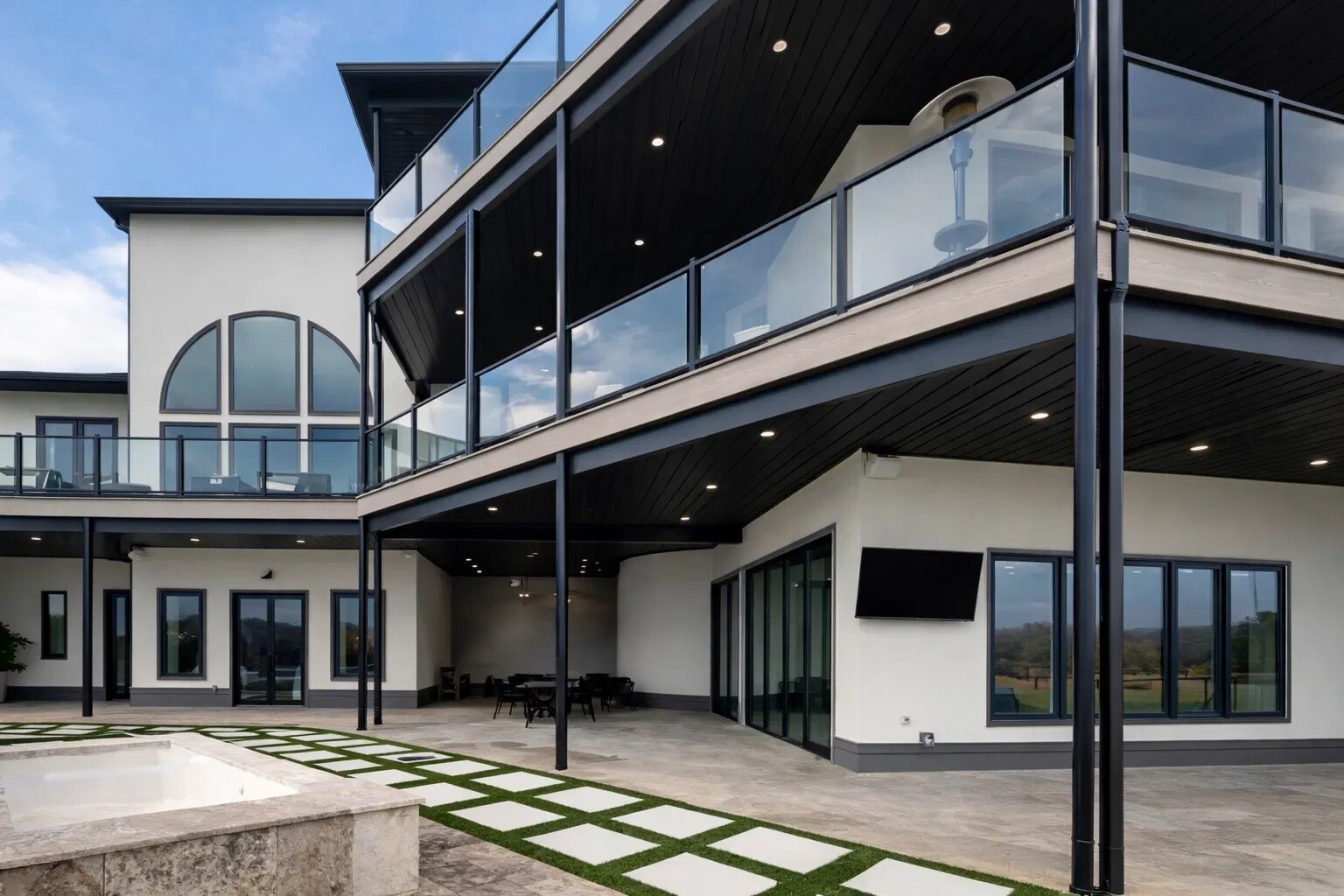
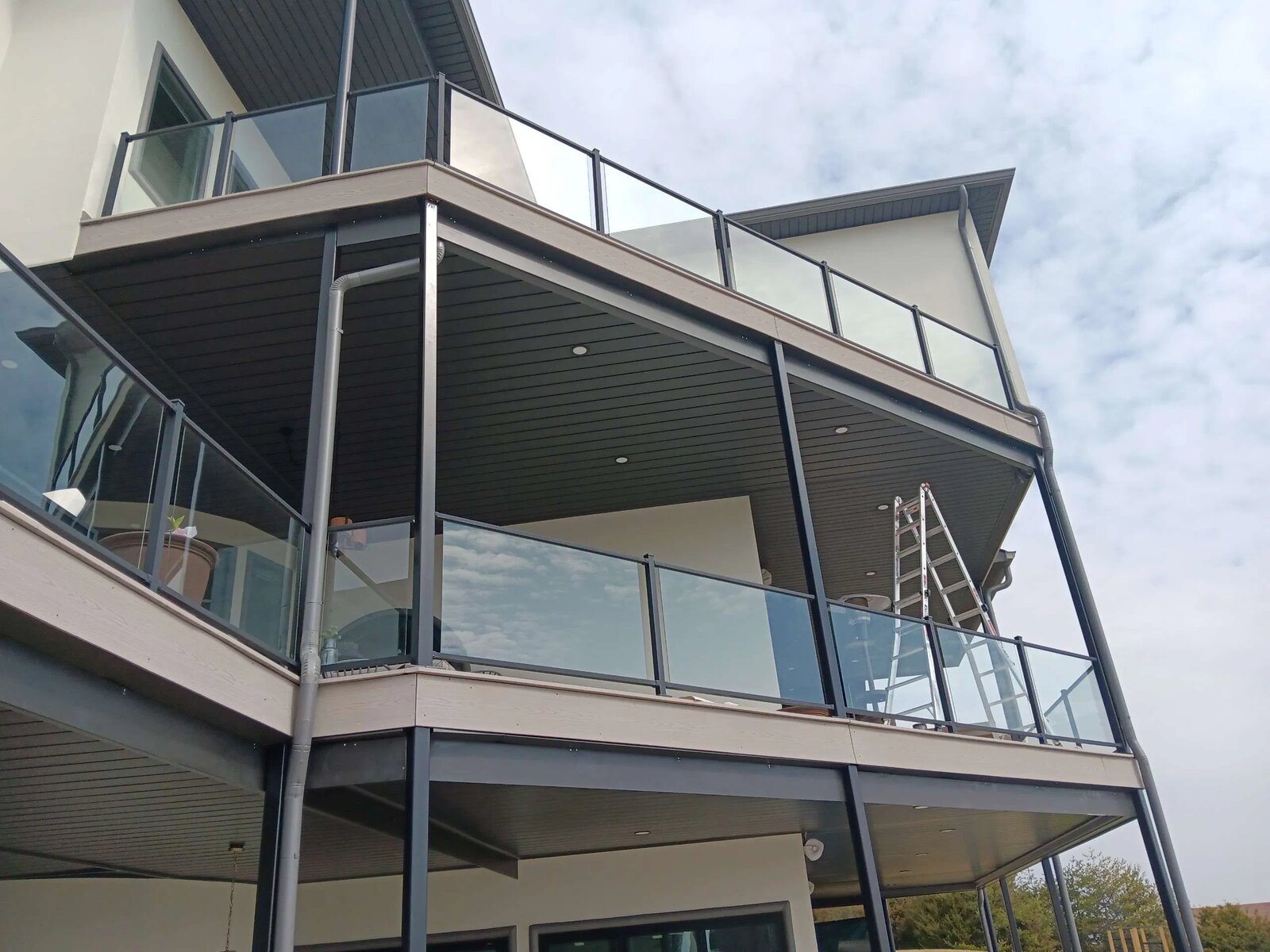
Builder called us in on short notice. Another painter had been on the fascia and underdeck soffit work, and the result wasn't going to hold. The finish needed correction and completion before the home could close out, and the builder was already past schedule. Painting By Lee got the call to step in mid-project and finish it right.
Solution
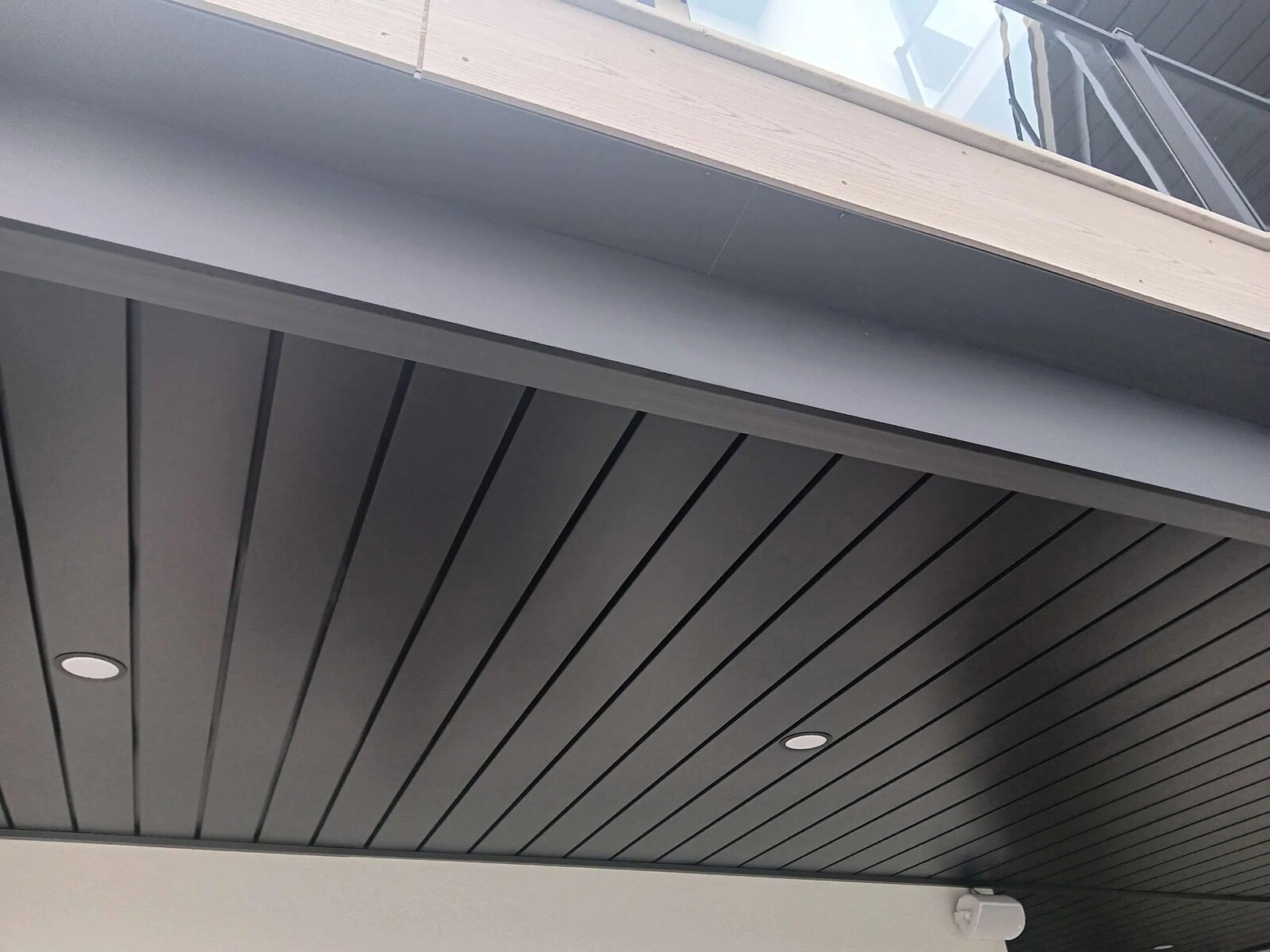
Assessed what the previous painter had left, addressed the surface condition issues, and finished the cantilevered underdeck soffit and fascia bands to spec. Deep saturated bronze-black sprayed evenly across the linear plank ceiling. Glass railings, the white stucco body, and the pavement masked through every phase.
Products used
Sherwin-Williams Emerald Exterior Acrylic Latex (deep bronze-black, satin) — the right product for a dark exterior application that has to hold color and resist fade in direct Tennessee sun. Sherwin-Williams Loxon XP for spot priming where prior work needed sealing. Heavy-duty masking films across all glass and adjacent stucco.
Challenges
Coming in behind another painter means inheriting whatever surface conditions they left — film thickness variance, possible compatibility issues with their product choices, and the need to feather cleanly into their work without it telegraphing under raking light. Builder's deadline was non-negotiable; spray windows were limited to early morning when winds were calm and other trades were off-site.
Result
Builder closed the home on schedule. The fascia and underdeck read as one continuous plane with no visible trace of two painters' worth of work. This is the kind of job builders call us for: arrive on short notice, take over someone else's mess, finish it like it was always one job.
Interior
Problem
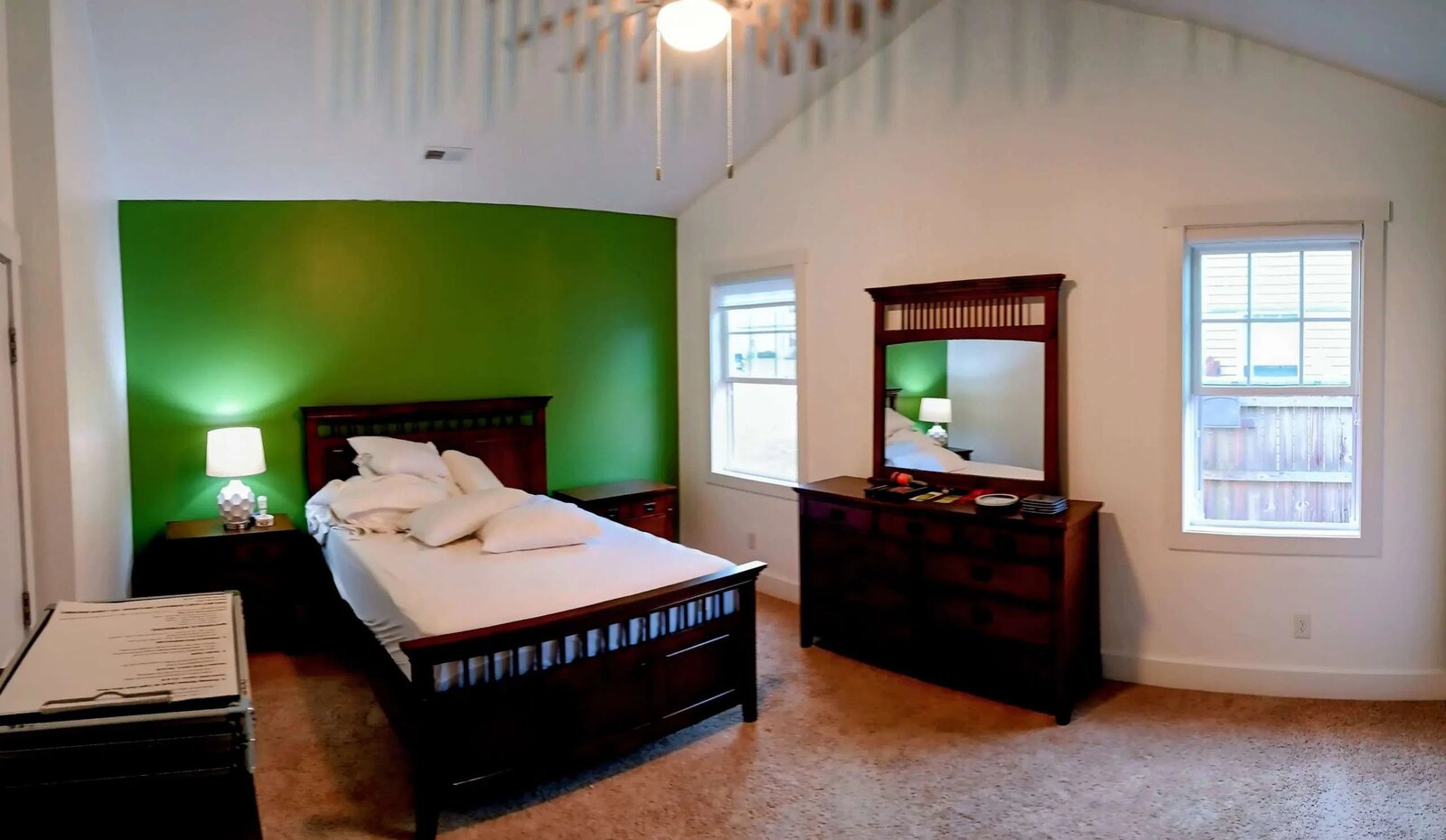
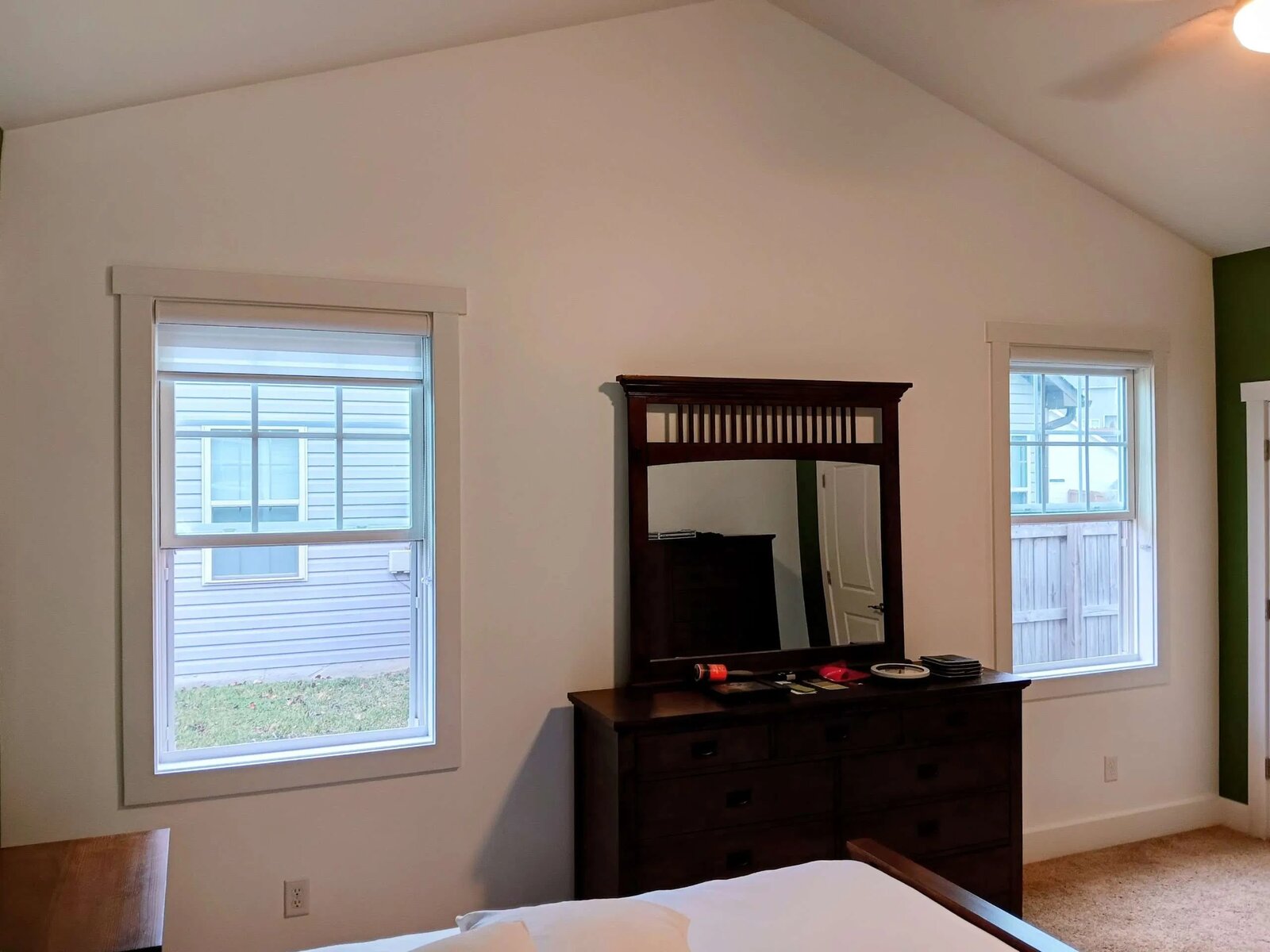
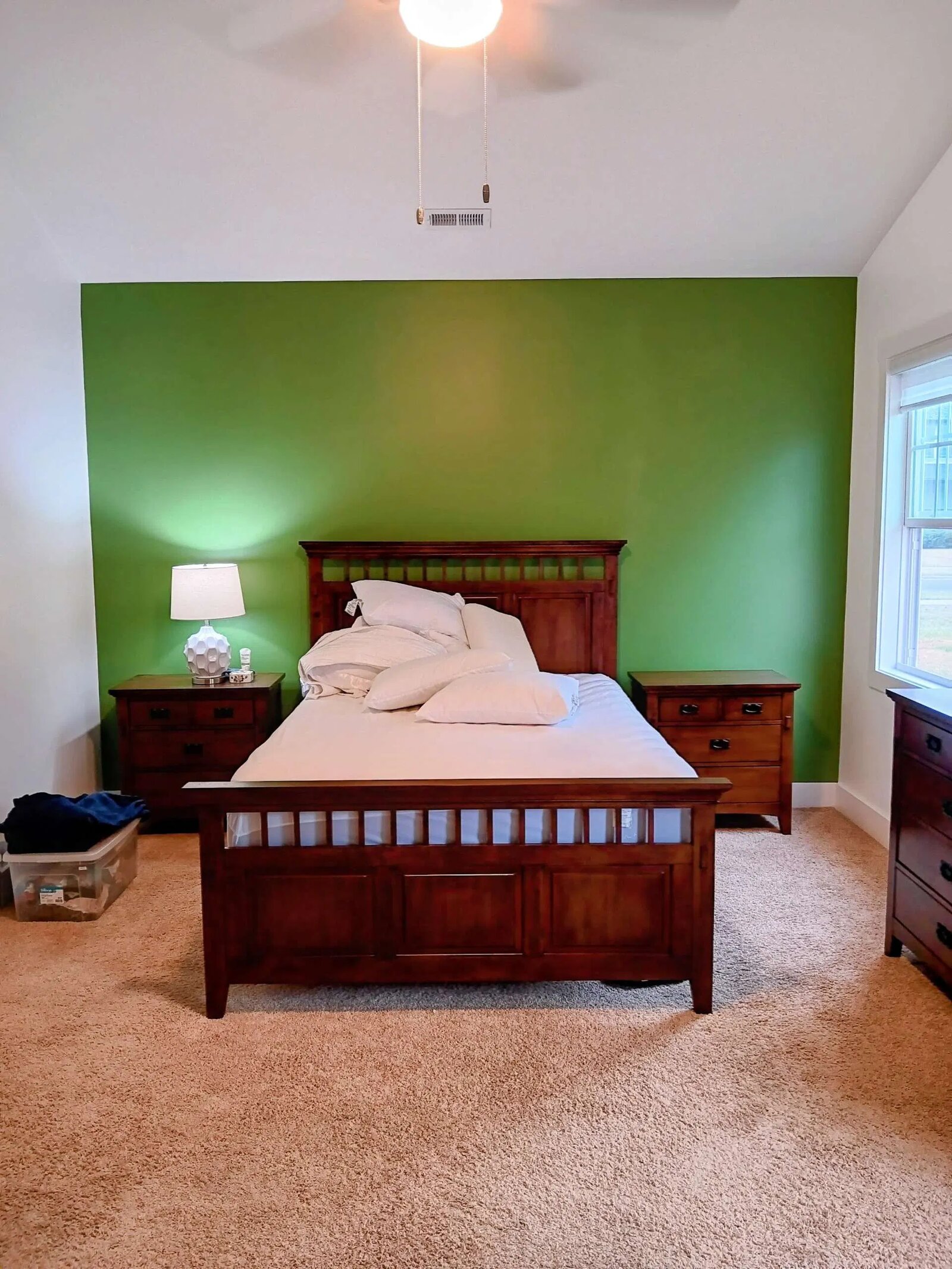
New owners were moving into the home and wanted the master bedroom updated before they moved in. Walls were tired, the trim needed refreshing, and the room needed to feel like theirs from day one. Ceilings were in good shape and stayed out of scope.
Solution
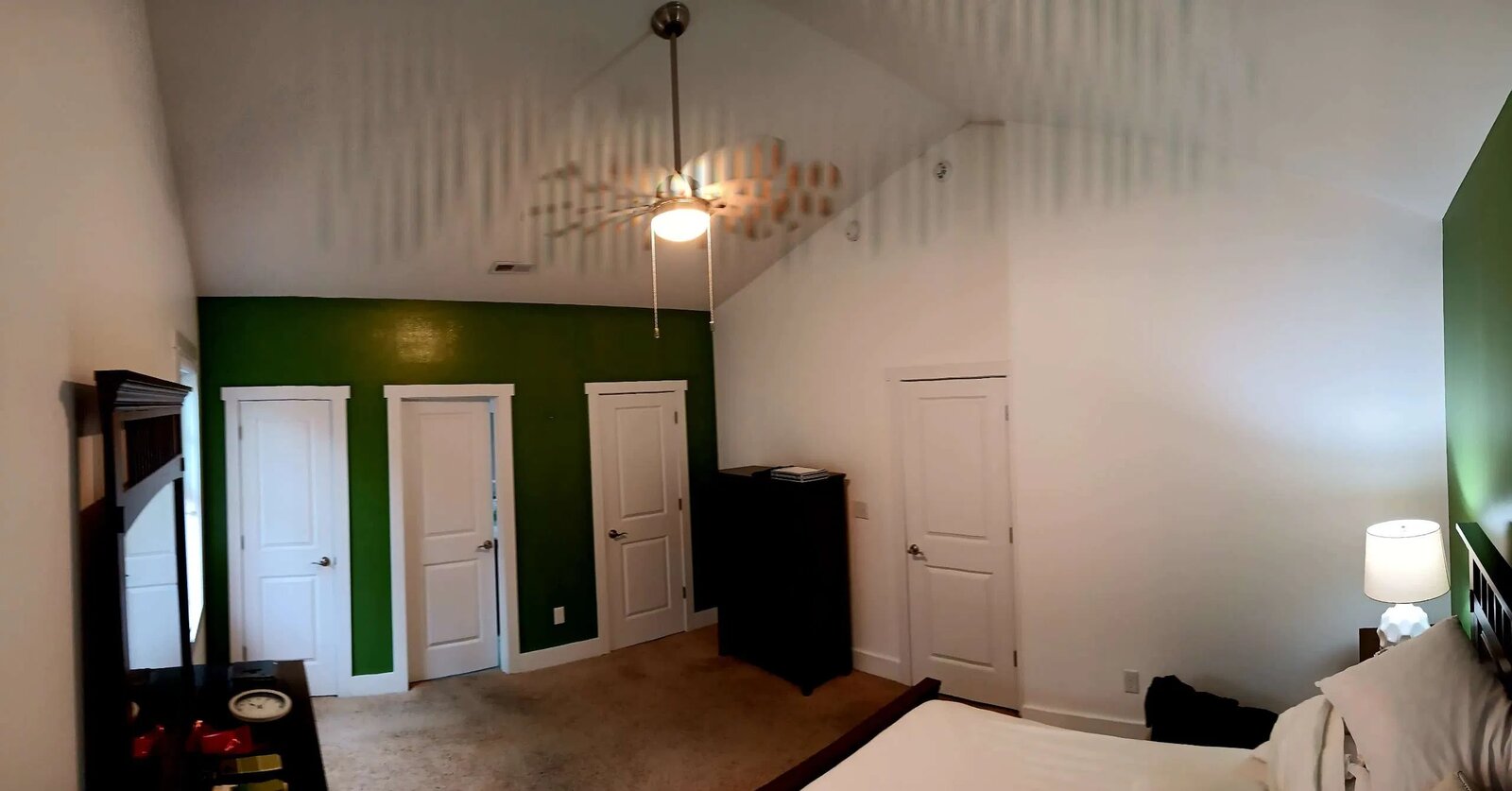
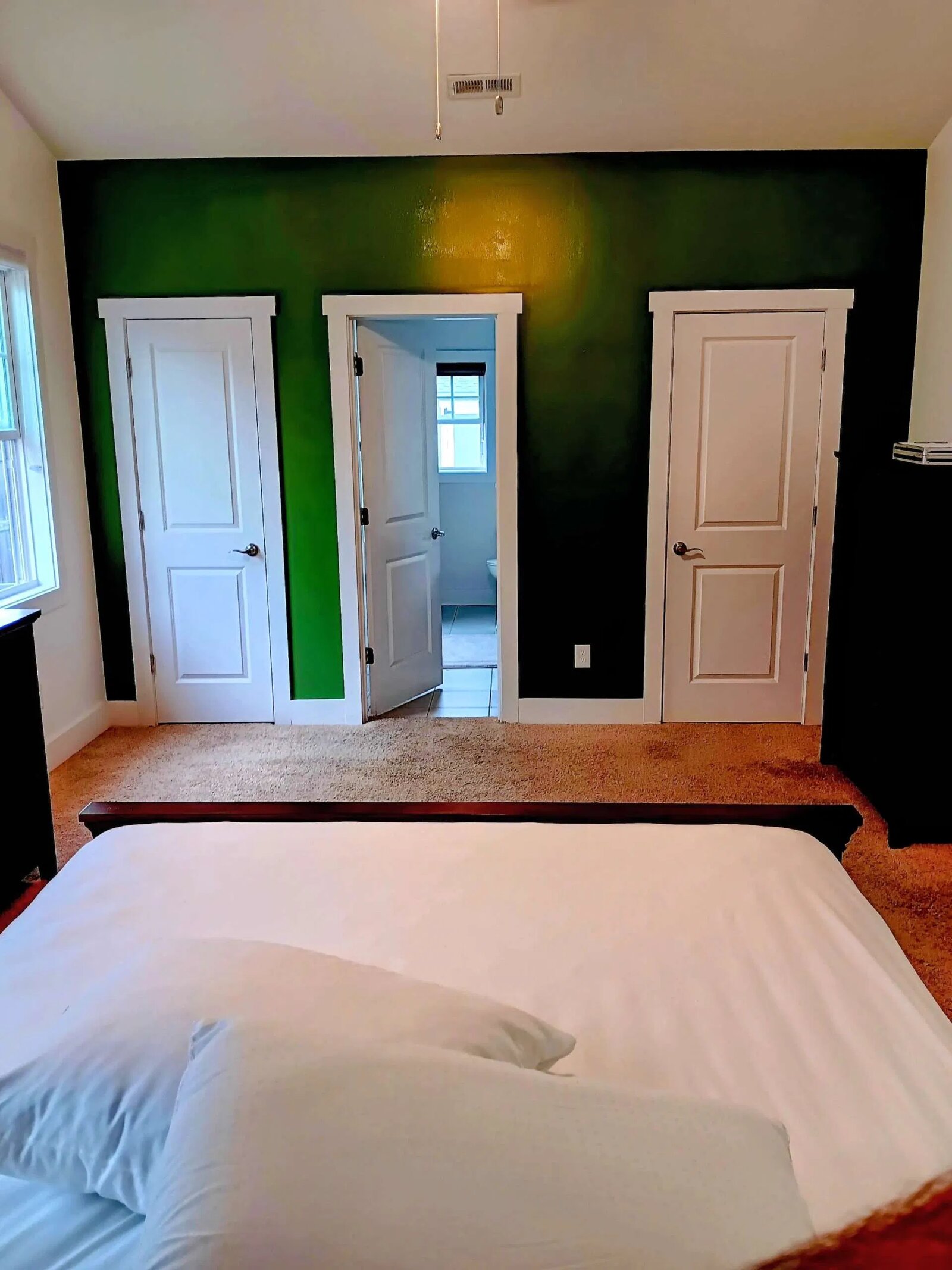
Walls repainted in a soft warm cream as the dominant tone, with the headboard wall painted in a deep hunter green for an anchor accent. Trim and doors caulked at every seam and re-finished in clean bright white. Ceilings were not part of this scope.
Products used
Sherwin-Williams interior latex (warm cream walls and hunter-green accent wall). Sherwin-Williams interior enamel (trim and doors, white).
Challenges
The accent wall is long and uninterrupted, which makes any batch-mix variation immediately visible — so it was painted from a single mix, two coats, with overnight dry between. Caulking the trim cleanly along every wall and door is what separates a refresh that looks crisp from one that looks like a quick coat of paint.
Result
Move-in-ready bedroom for the new owners. The hunter-green accent anchors the dark wood furniture, and the warm cream walls give the room a calm, restful feel.
Commercial
Problem
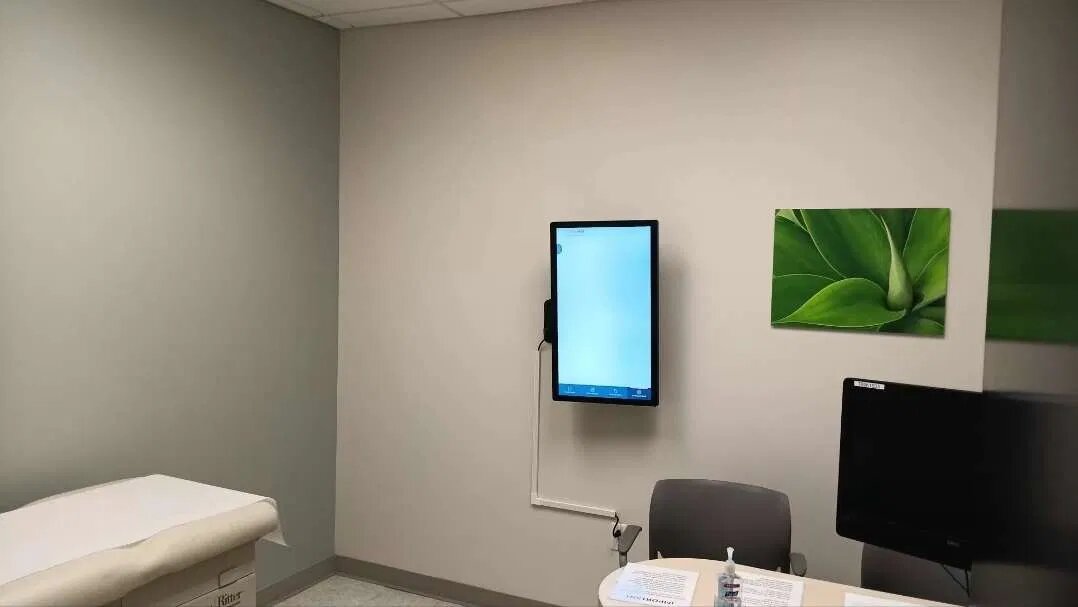
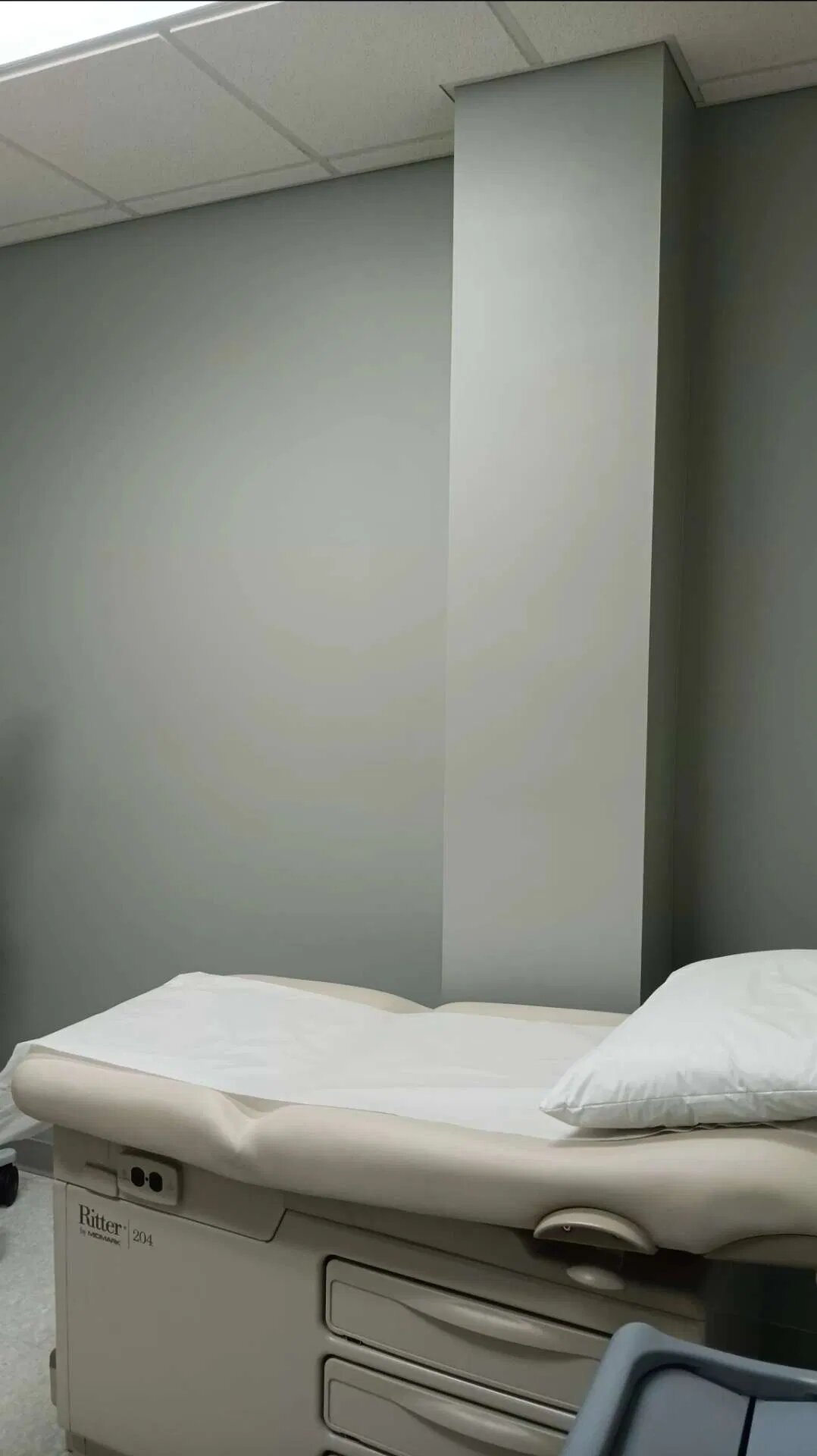
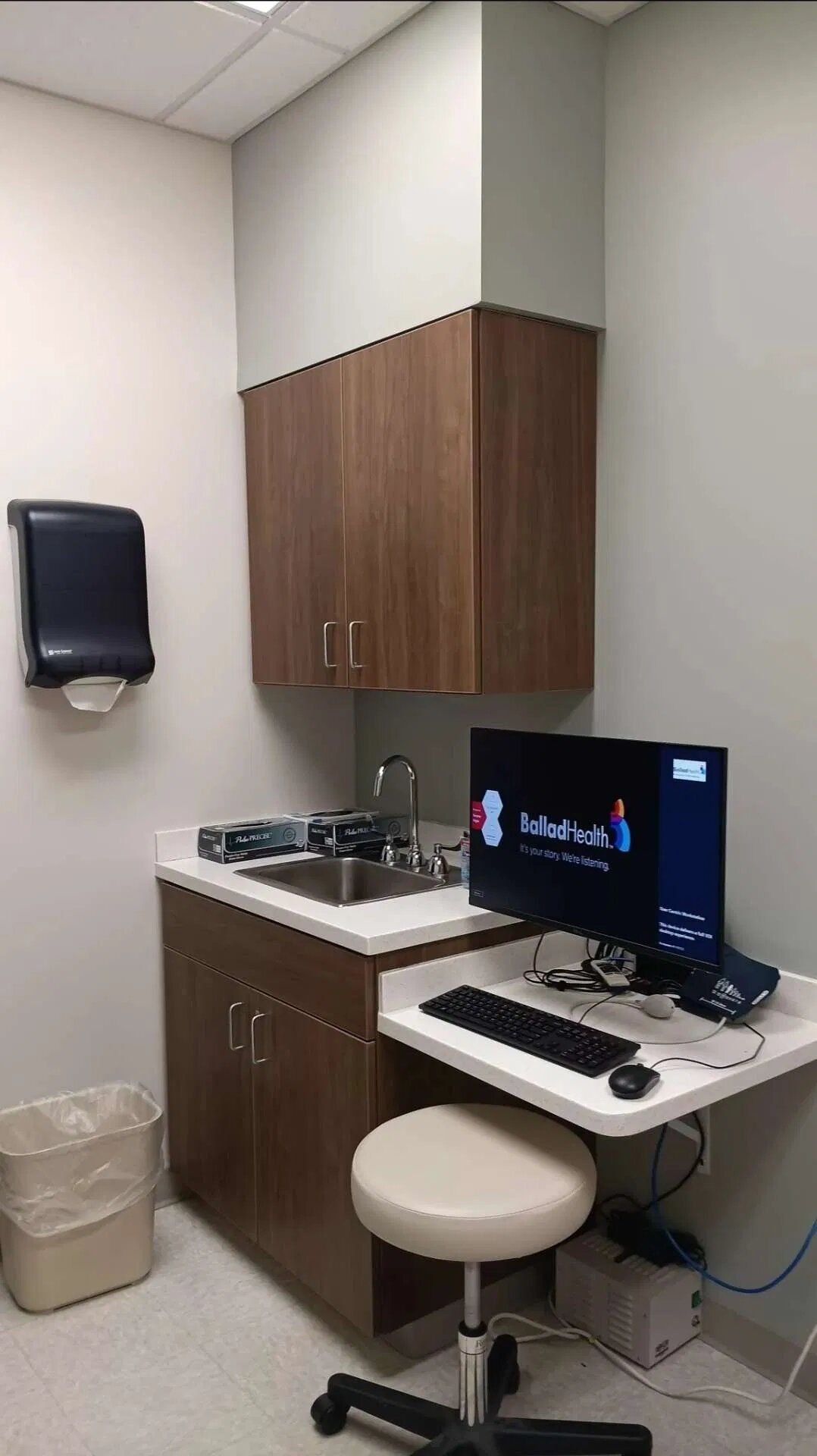
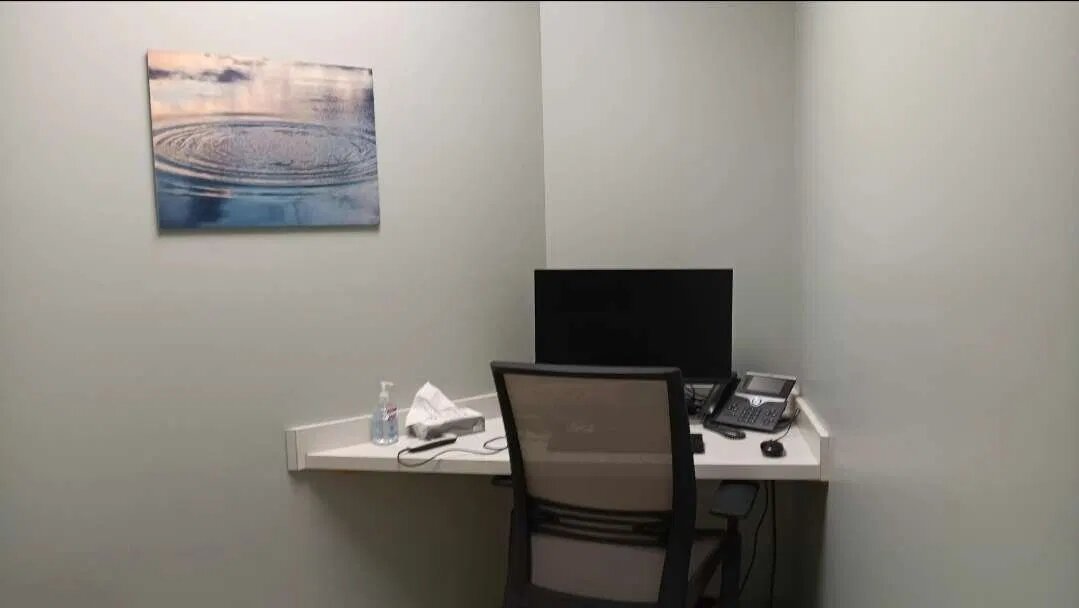
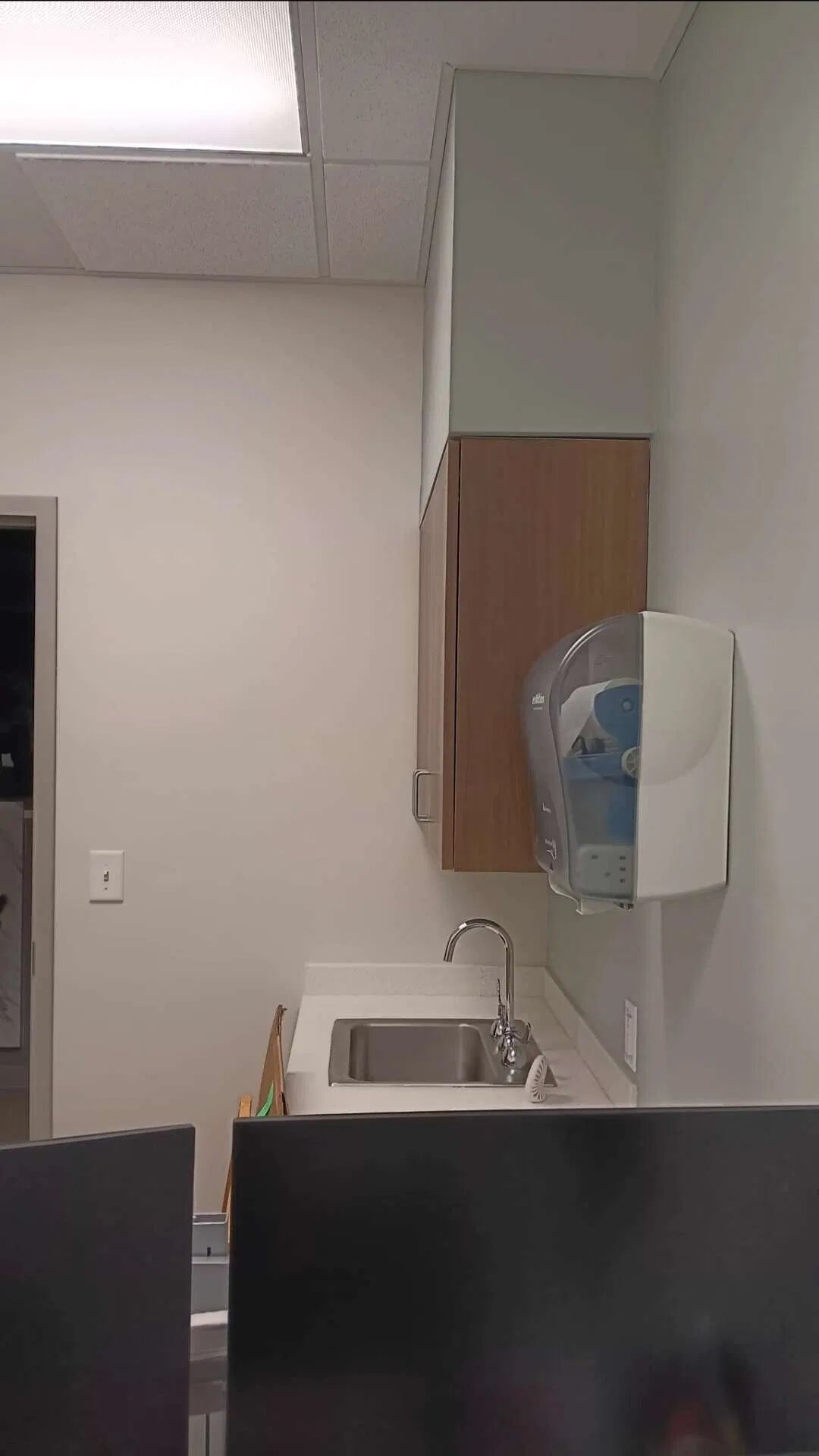
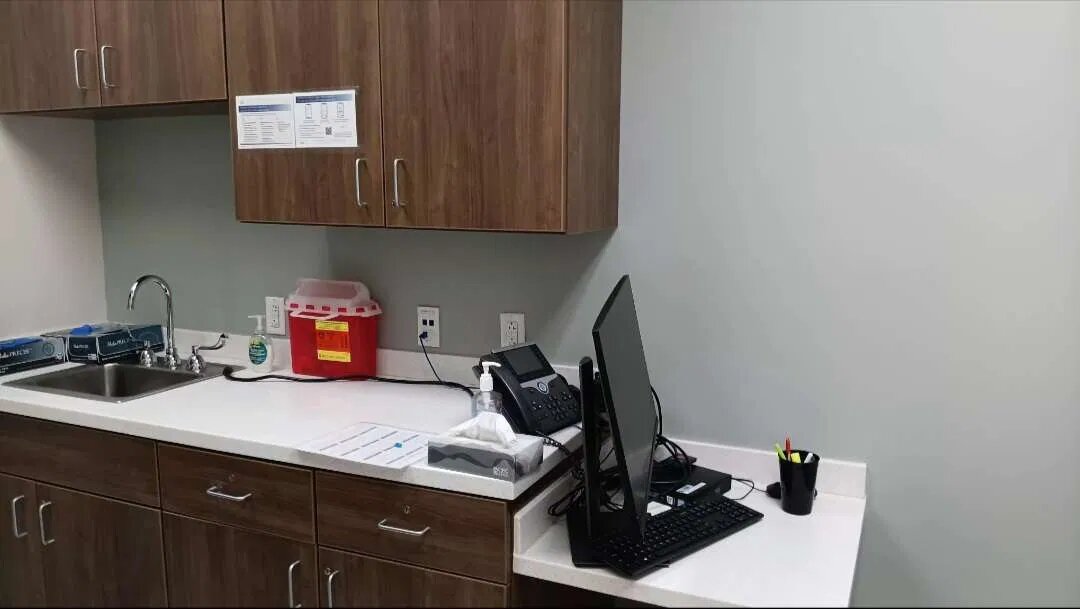
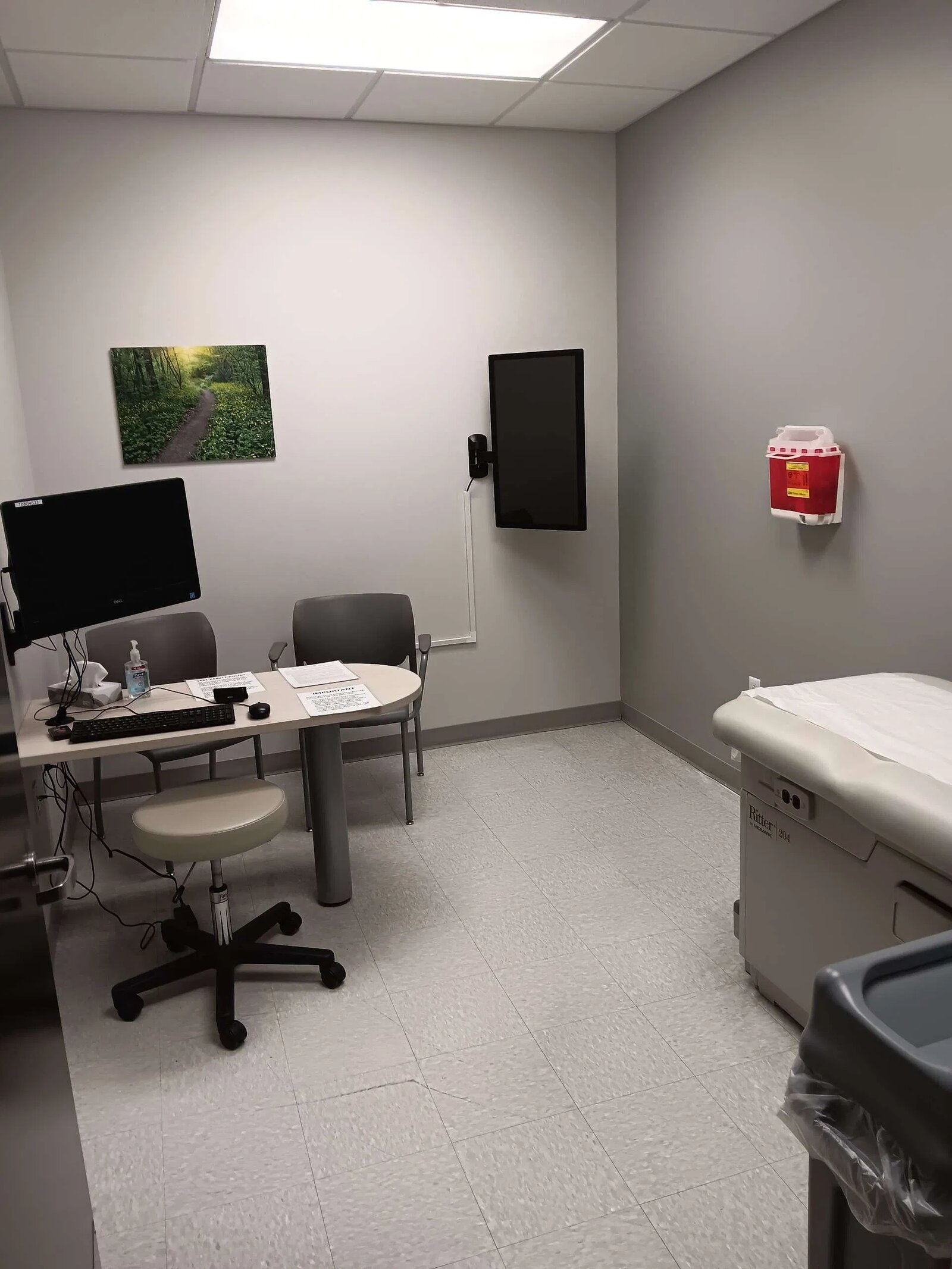
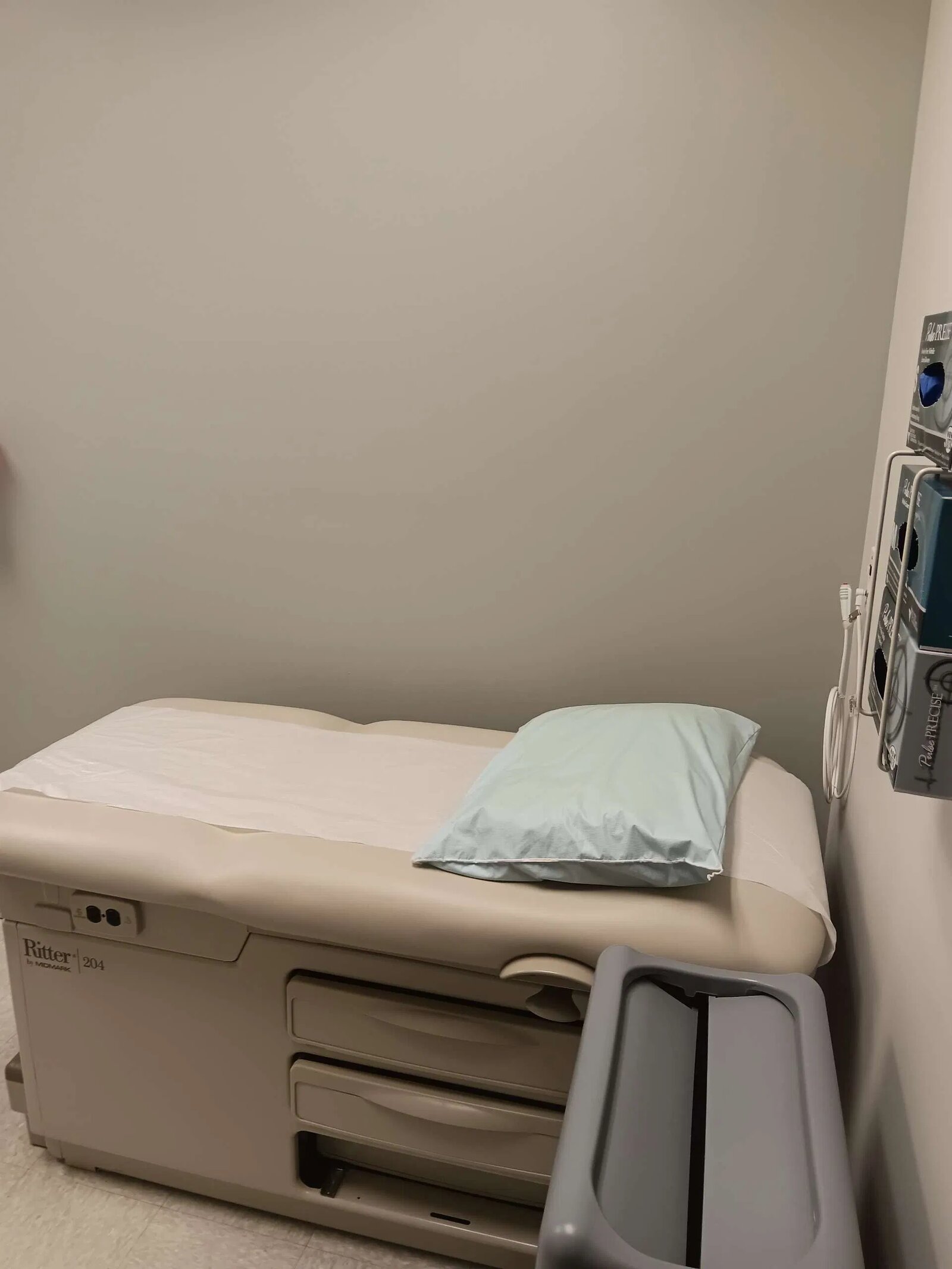
Ballad Health needed 10 to 12 rooms repainted at the CVA Heart Institute — exam rooms, consult rooms, support spaces. The clinic could not lose operating time, so the entire job had to happen on a single weekend while the clinic was closed.
Solution
Scheduled the full job as one continuous weekend push. Started Friday evening once the clinic closed. Worked through Friday night and Saturday into Saturday night, painting every room in the planned palette. Sunday was cleanup, finishing touches, and walk-through.
Products used
Sherwin-Williams low-VOC interior latex selected for compatibility with a healthcare environment and the clinic's cleaning protocols. Cabinetry, doors, and existing trim left at clinic-standard white.
Challenges
A 10–12 room repaint inside a single weekend means relentless pacing — no time for callbacks, no margin for dry-window mistakes. Equipment in every exam room (exam tables, monitors, EKG cabling) had to be masked or carefully moved without disrupting the room's normal function. Walk-through standards inside a healthcare facility are stricter than residential work — the rooms have to be ready for patients Monday morning, not just look painted.
Result
Successful walk-through on Sunday. Clinic opened for normal operations Monday morning, every room ready. This is the kind of job we built capacity for — high-volume commercial repaints inside an operational window where the schedule is the deliverable.
Exterior
Problem
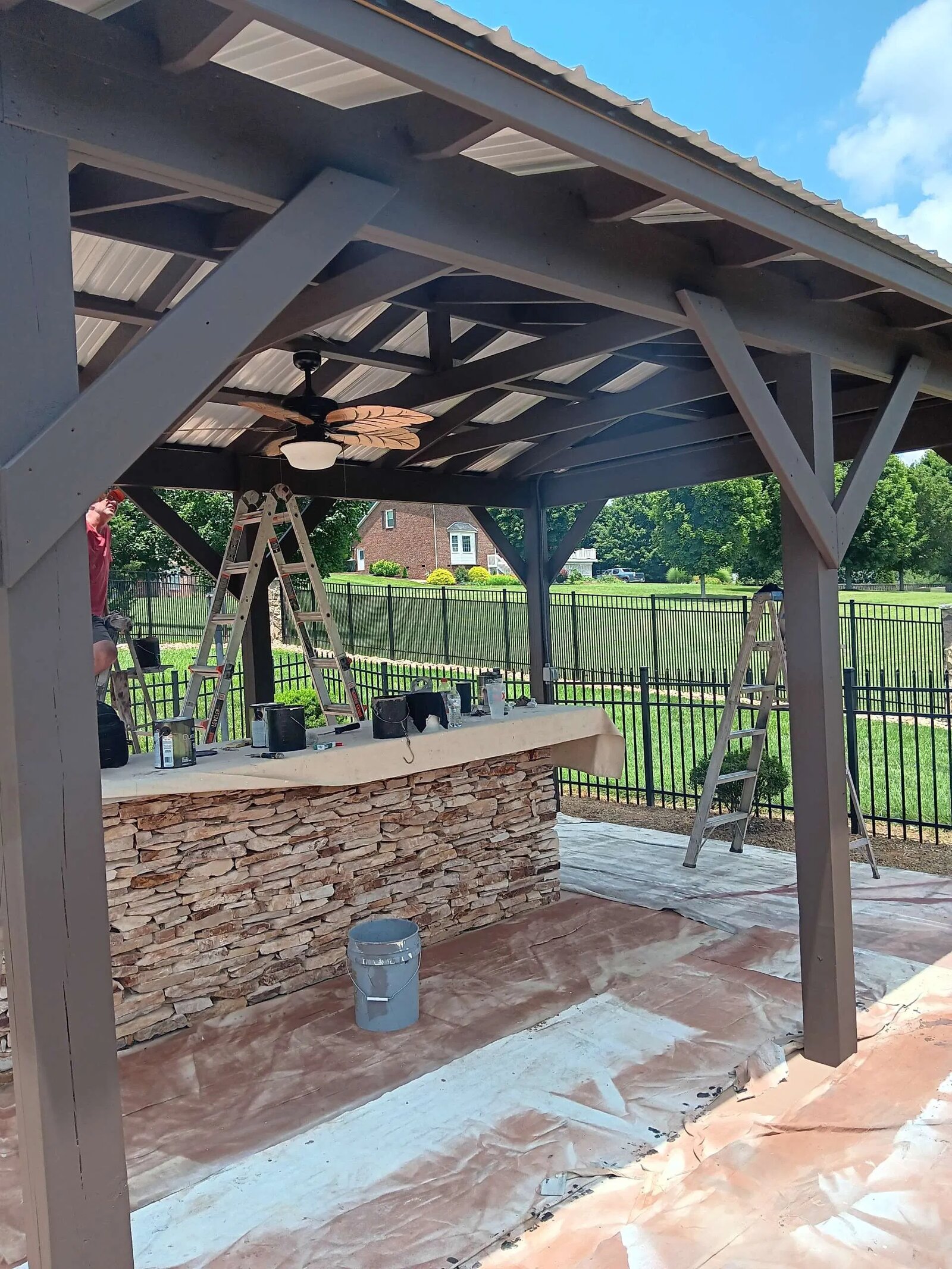
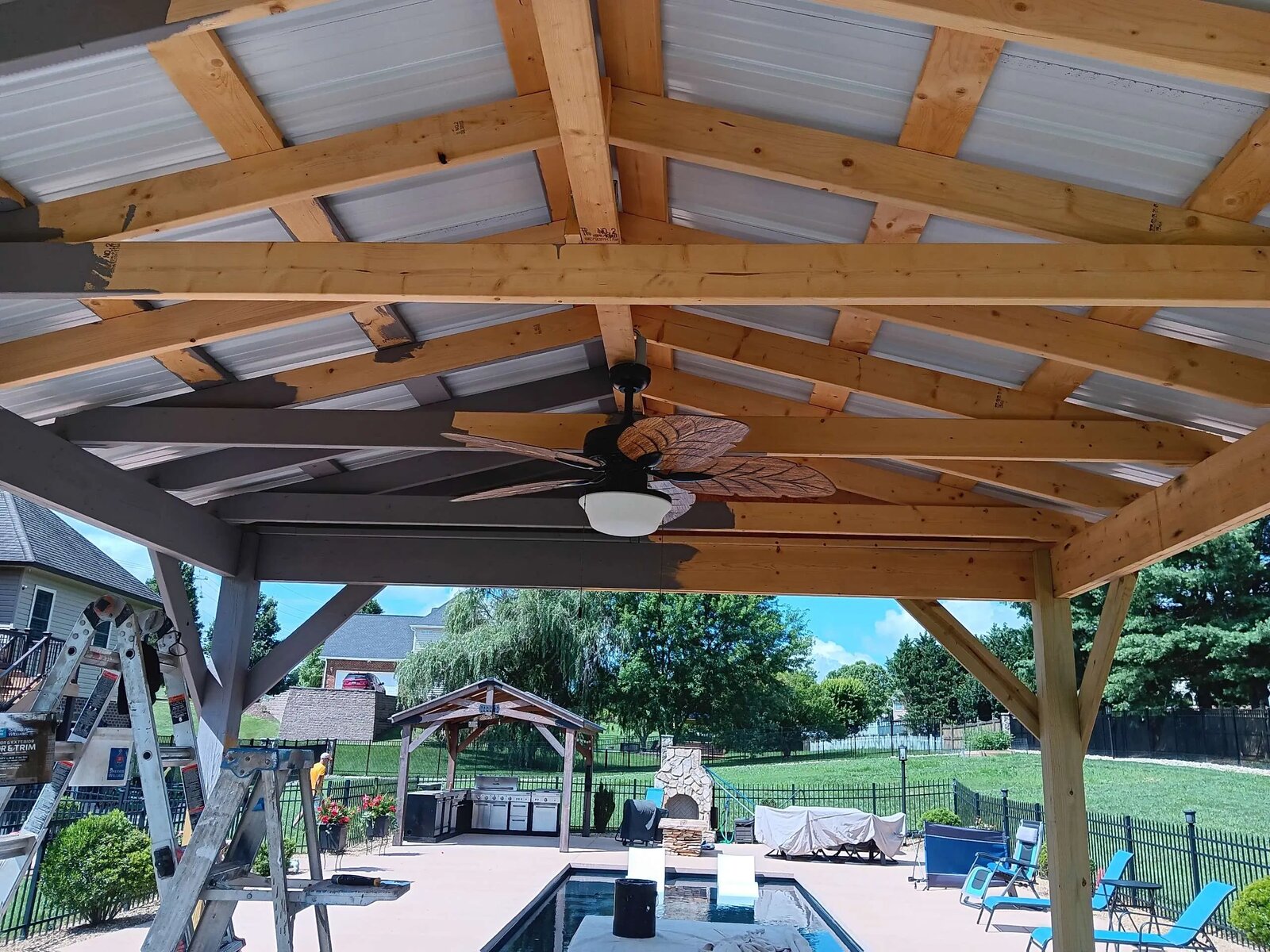
New backyard pavilion — timber framework over a stone bar, next to the homeowner's pool. The wood was raw and needed to be stained and sealed before it took its first real season of weather.
Solution
Applied two coats of exterior wood stain across the pavilion framework — posts, beams, rafters. Stone bar masked. Pool covered during application and cleanup.
Products used
Exterior wood stain in a deep walnut tone, applied in two coats for full coverage and seal.
Challenges
Two coats means two weather windows, and the pool below means complete overspray control through both. Standard pavilion staining work, run cleanly.
Result
Pavilion sealed and finished, ready for normal outdoor use.
Restoration
Problem
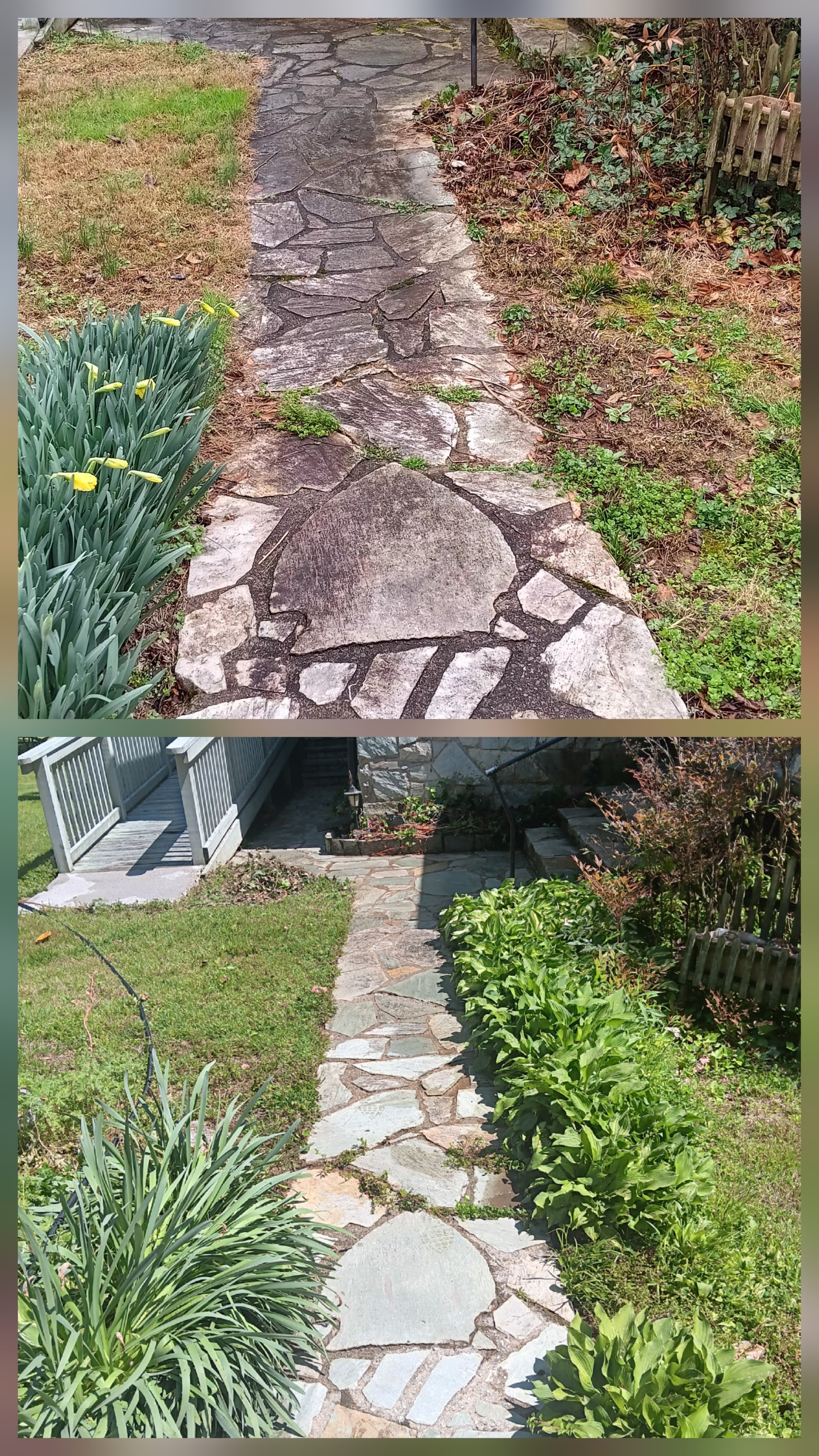
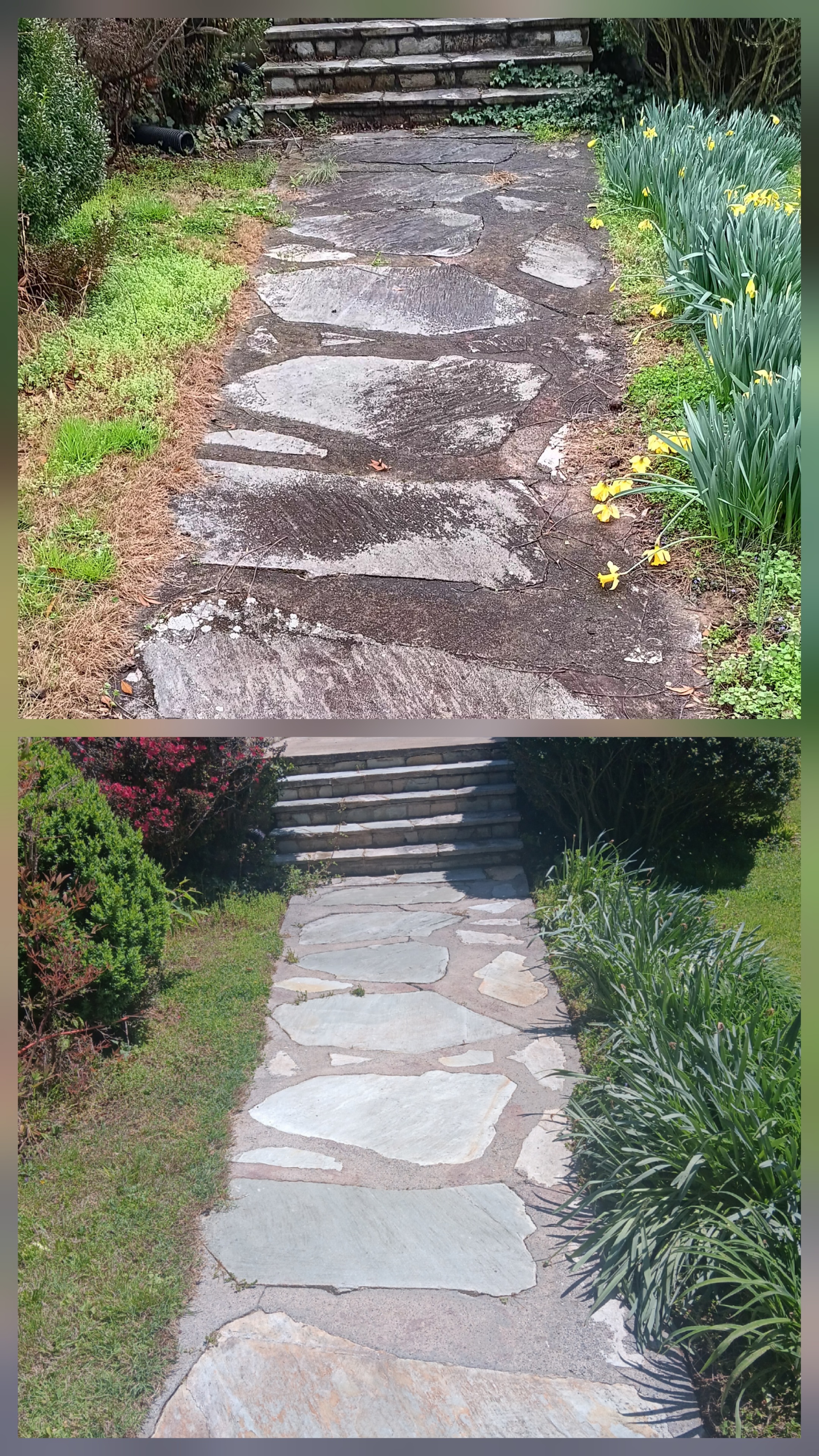
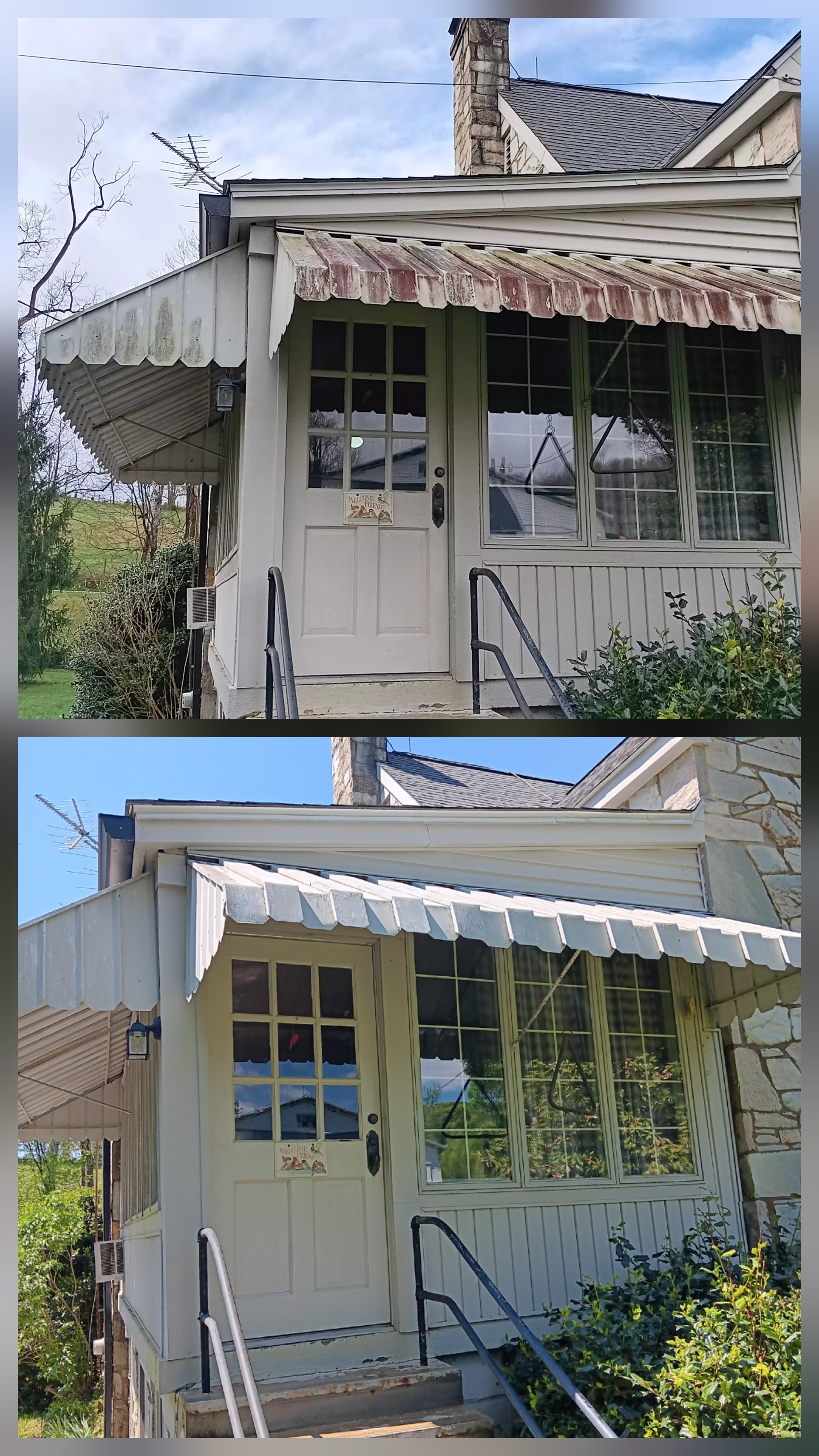
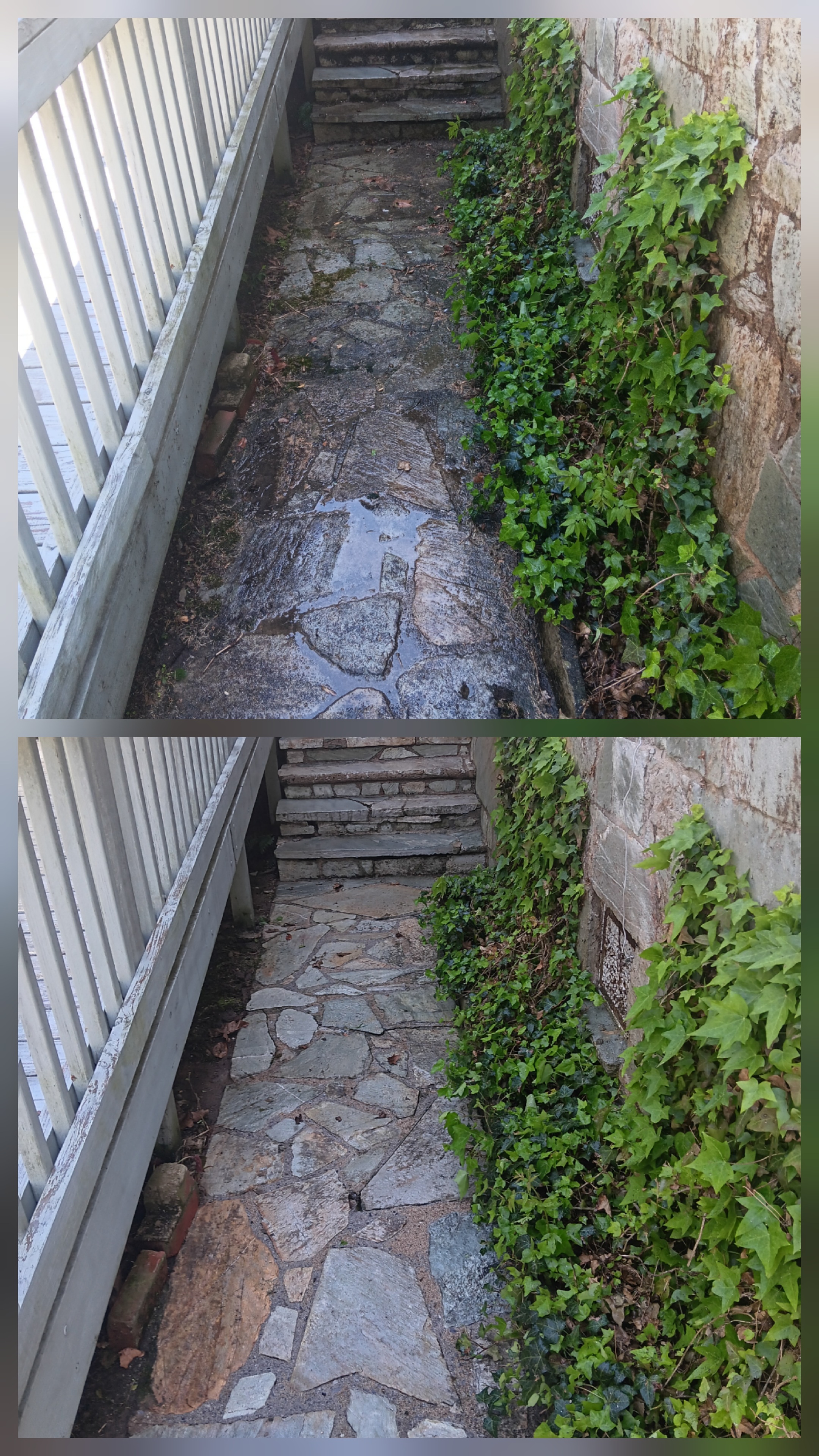
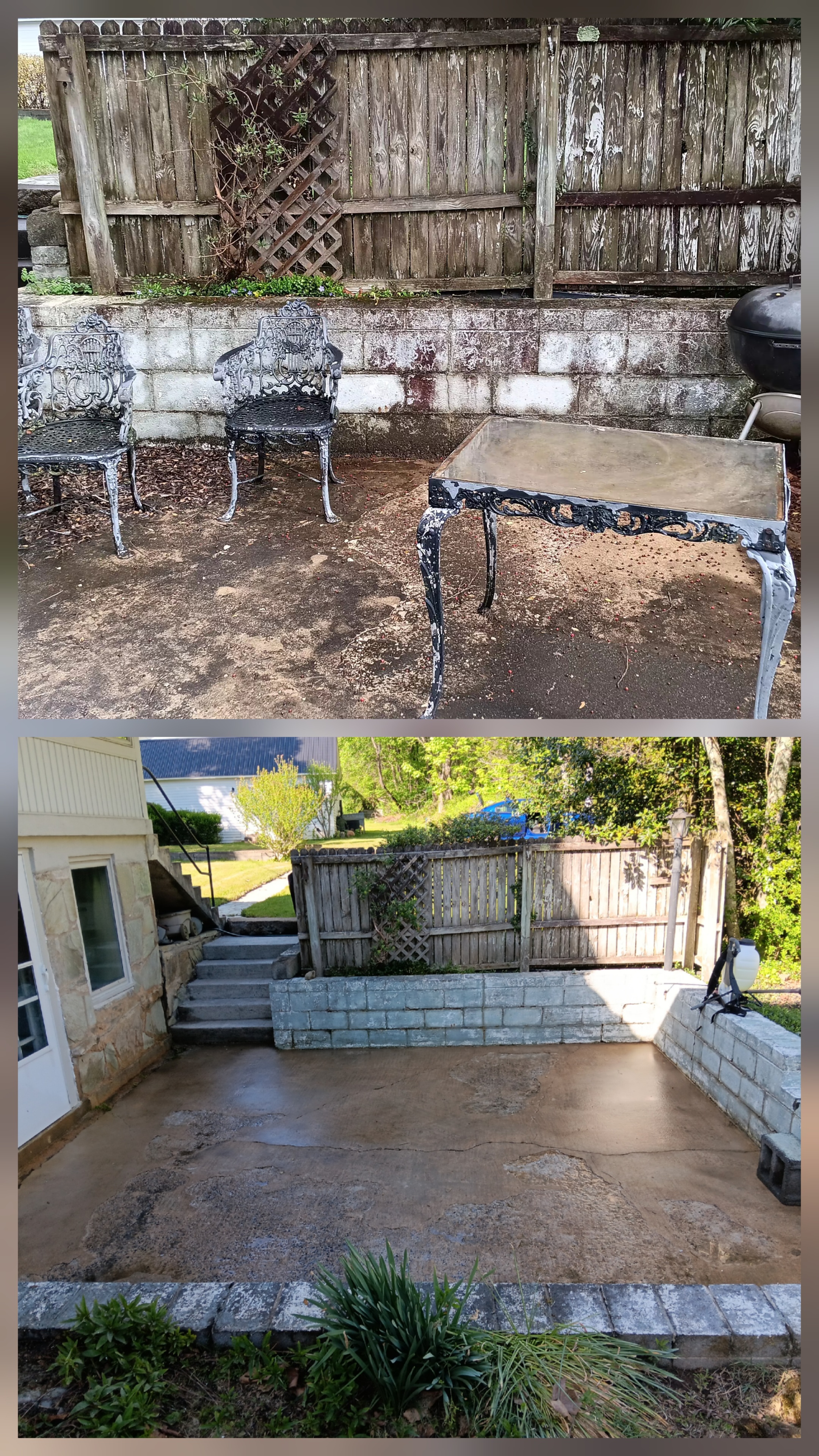
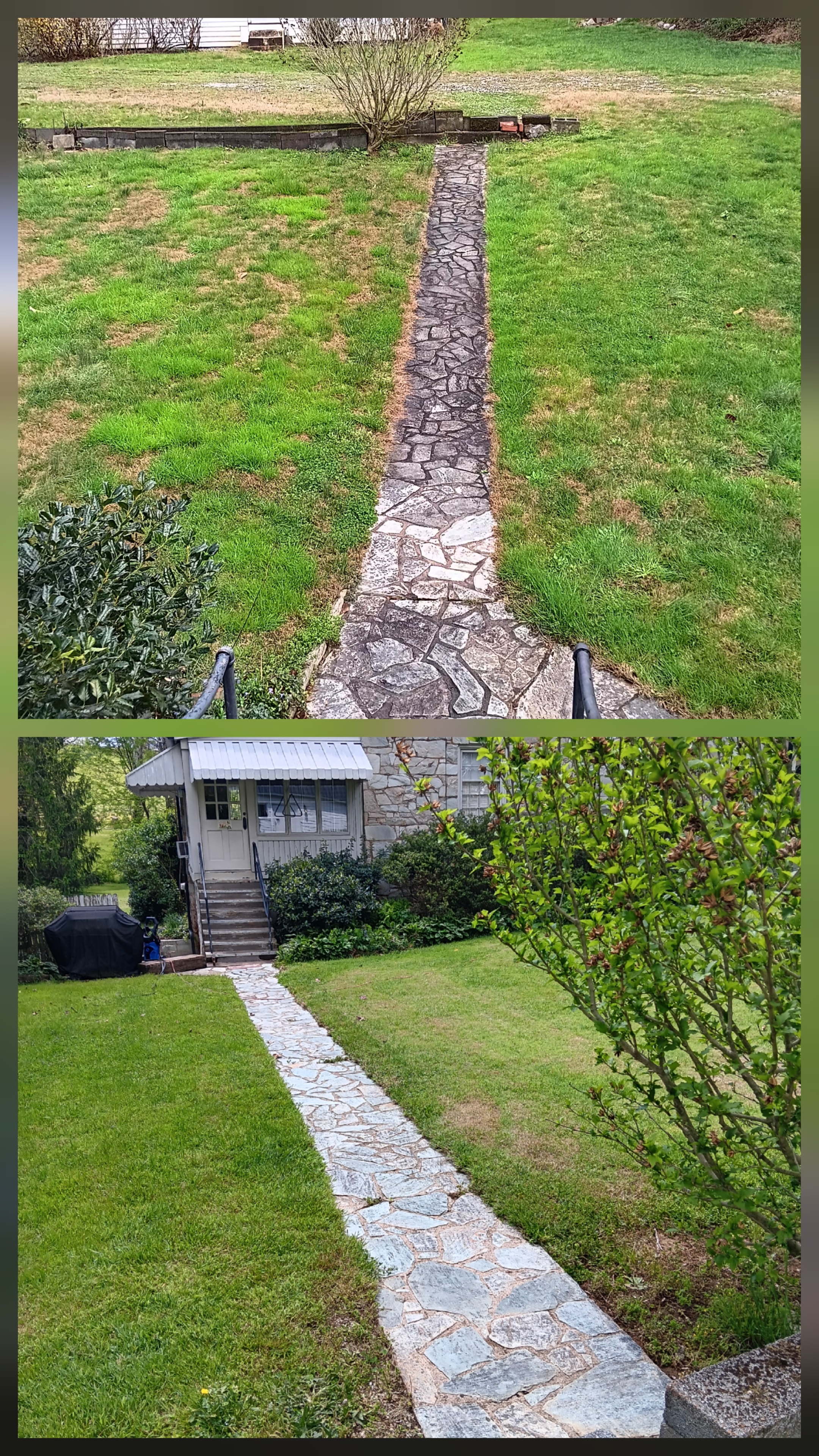
Older Jonesborough property where years of organic buildup, embedded grime, and weather exposure had darkened the original stone across the entry walkways, side passages, patio, and front-door awning. Walkway stones had effectively disappeared into the surrounding mulch and moss. The awning had developed heavy rust-orange streaking that no normal wash had been able to lift.
Solution
Controlled cleaning system tuned to the surface, not standard power washing. Pressure and chemistry calibrated separately for the flagstone walkways, the painted awning, the concrete patio, and the stone retaining wall — each surface needed a different approach to lift the embedded grime without damaging the substrate. Walkways fully reset to original stone color. Patio cleaned and brightened. Awning brought back to a uniform clean finish. Tight detail work in the confined side-passage where standard equipment couldn't reach.
Products used
Surface-specific cleaning solutions matched to stone porosity, painted metal, and concrete. No bleach on the awning paint. No aggressive pressure on the older stone seams.
Challenges
Older stone is more porous than new stone — too much pressure or the wrong chemistry can pit the surface or open the joints. The painted awning had decades of rust staining that needed lifting without stripping the underlying finish. Confined side-walkway between a wrought-iron fence and the foundation required hand-detail work, not equipment-driven cleaning.
Result
Original stone color came back across every surface. Beyond the obvious curb appeal, clean stone is also less slippery than moss-covered stone — meaningful safety improvement on the walkways and steps. The awning reads as restored, not just cleaned. The whole property looks ten years younger.
Interior
Problem
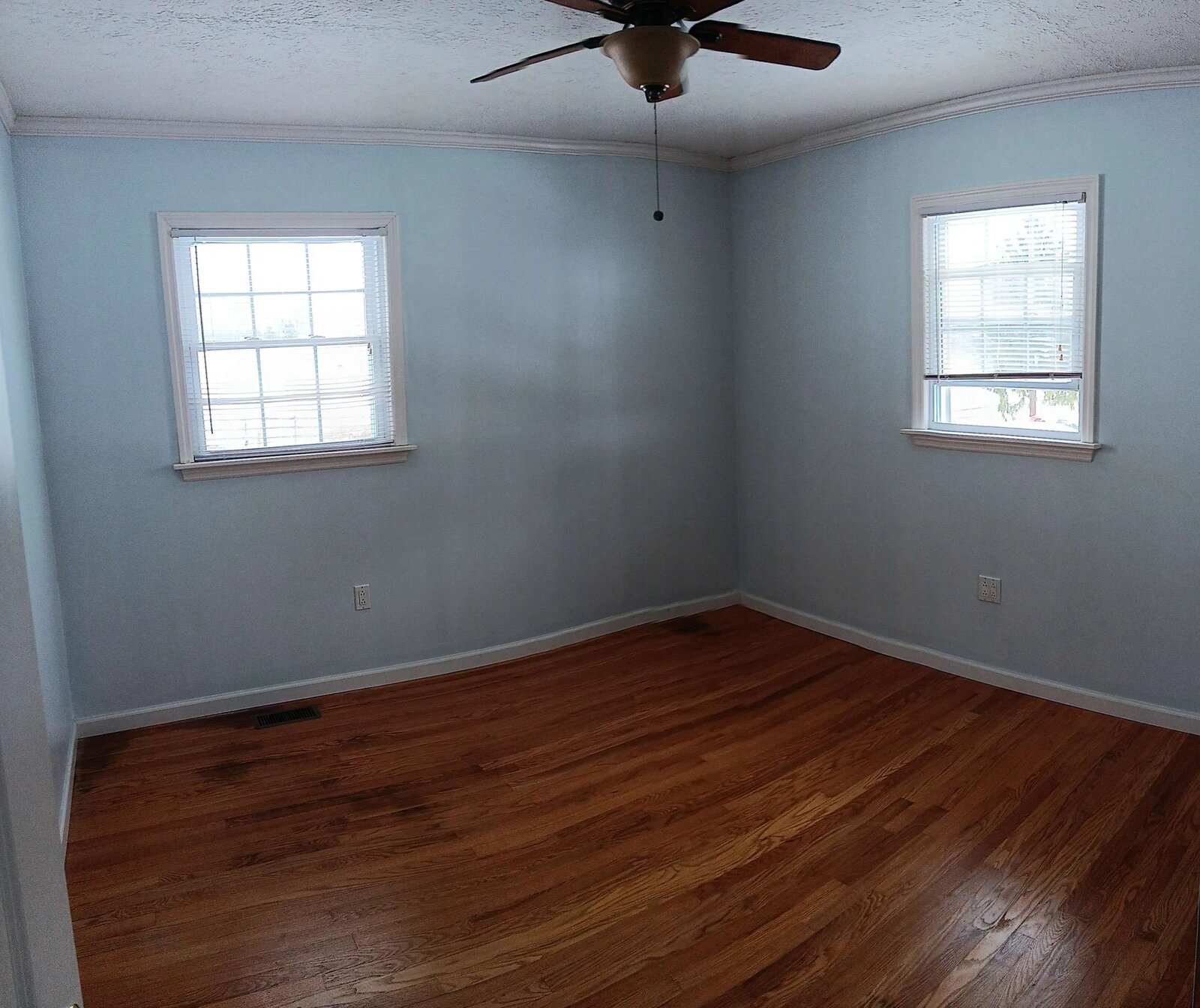
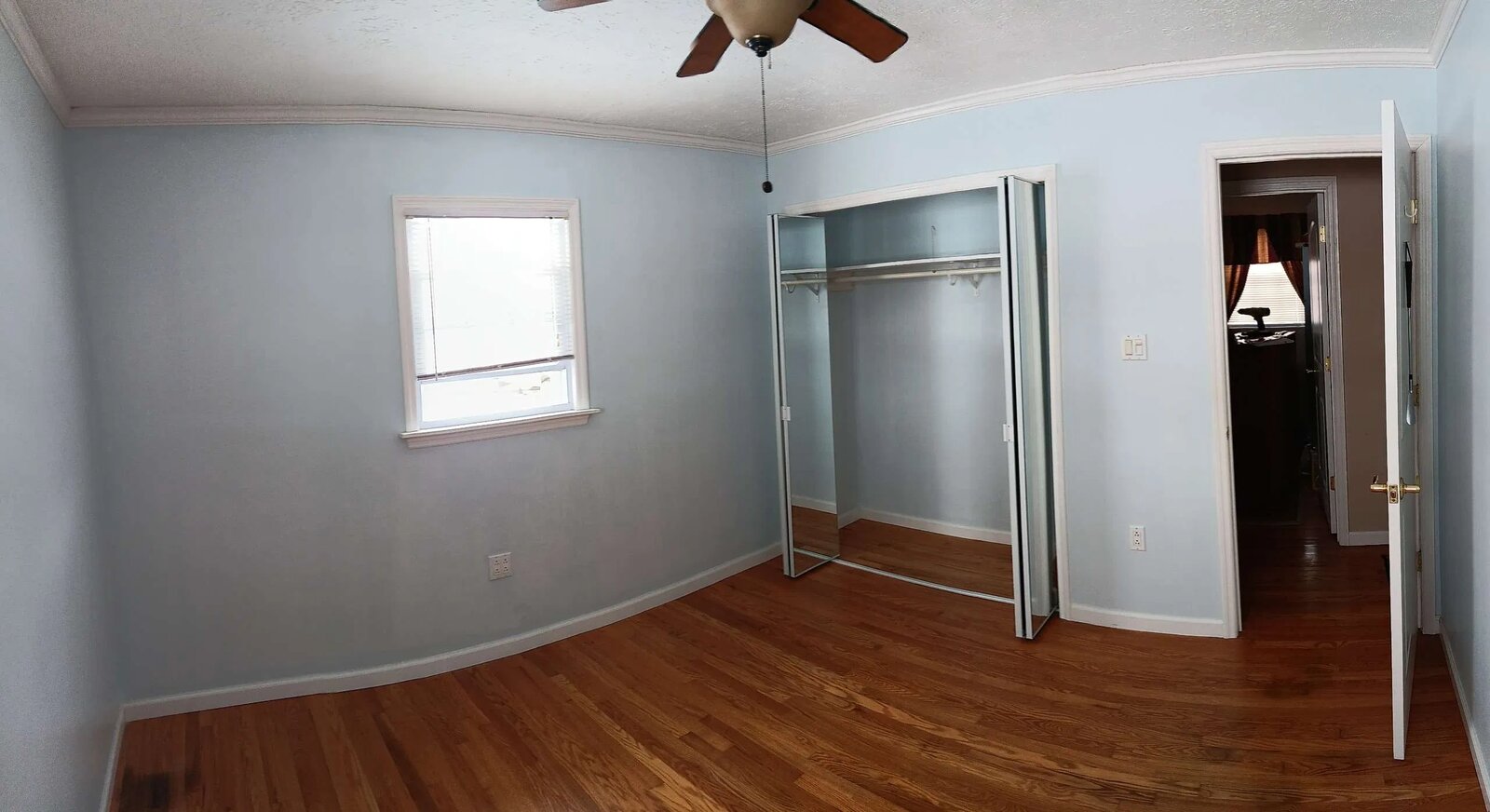
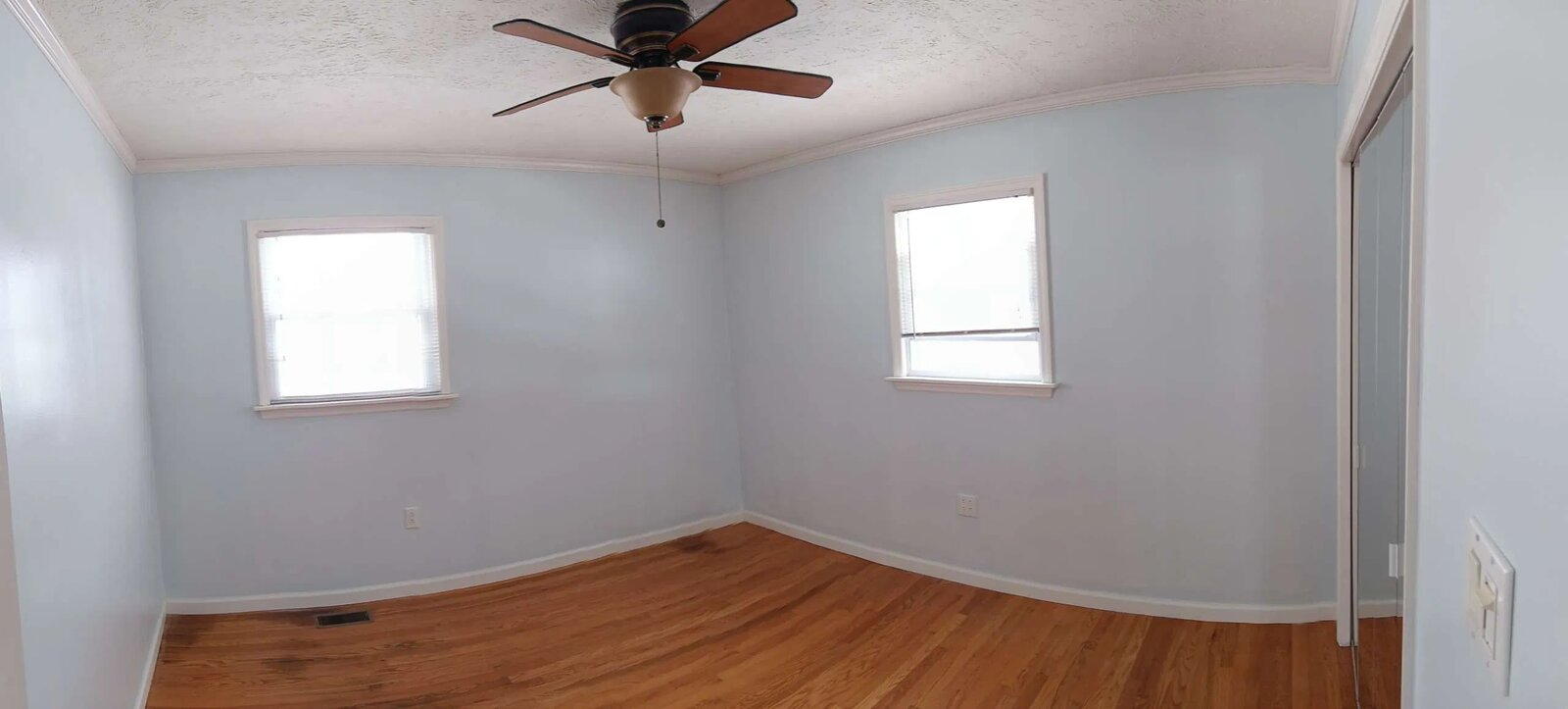
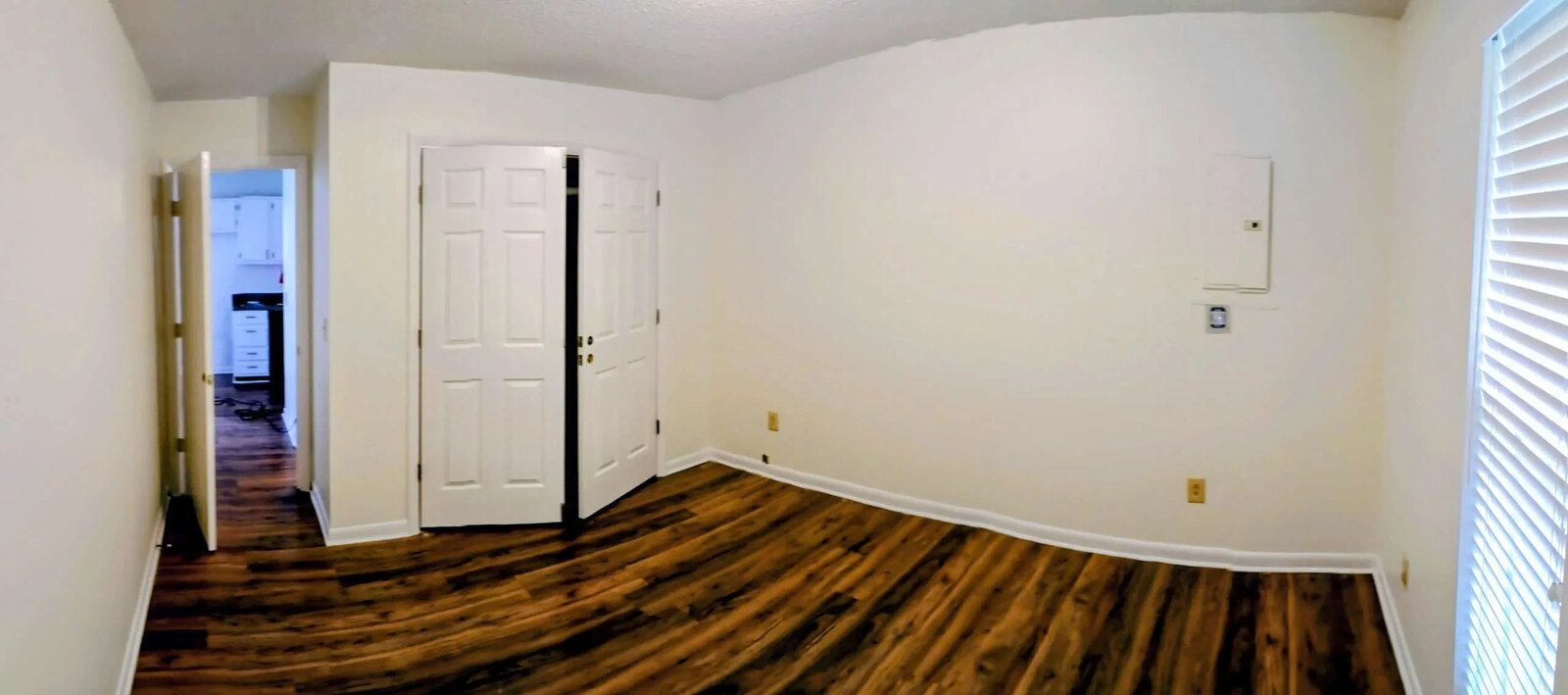
Customer wanted to update a bedroom that was feeling tired. The goal was a calmer, cleaner palette that would brighten the room and pair well with the existing wood floors.
Solution
Two coats of a soft blue-gray on the walls. Trim and ceiling refreshed in clean white. Hardware and outlet covers removed before cutting in for clean, sharp lines at every edge.
Products used
Sherwin-Williams interior latex (soft blue-gray, walls). Sherwin-Williams interior enamel (trim and ceiling, white).
Challenges
Existing wood floors were the room's feature — full floor protection was the priority through every phase. Small bedroom means cut lines at the trim have nowhere to hide; everything has to be tight.
Result
Bedroom reads as fresh and current. The soft blue-gray with white trim lets the wood floors carry the warmth of the space, which was the customer's goal.
Interior
Problem
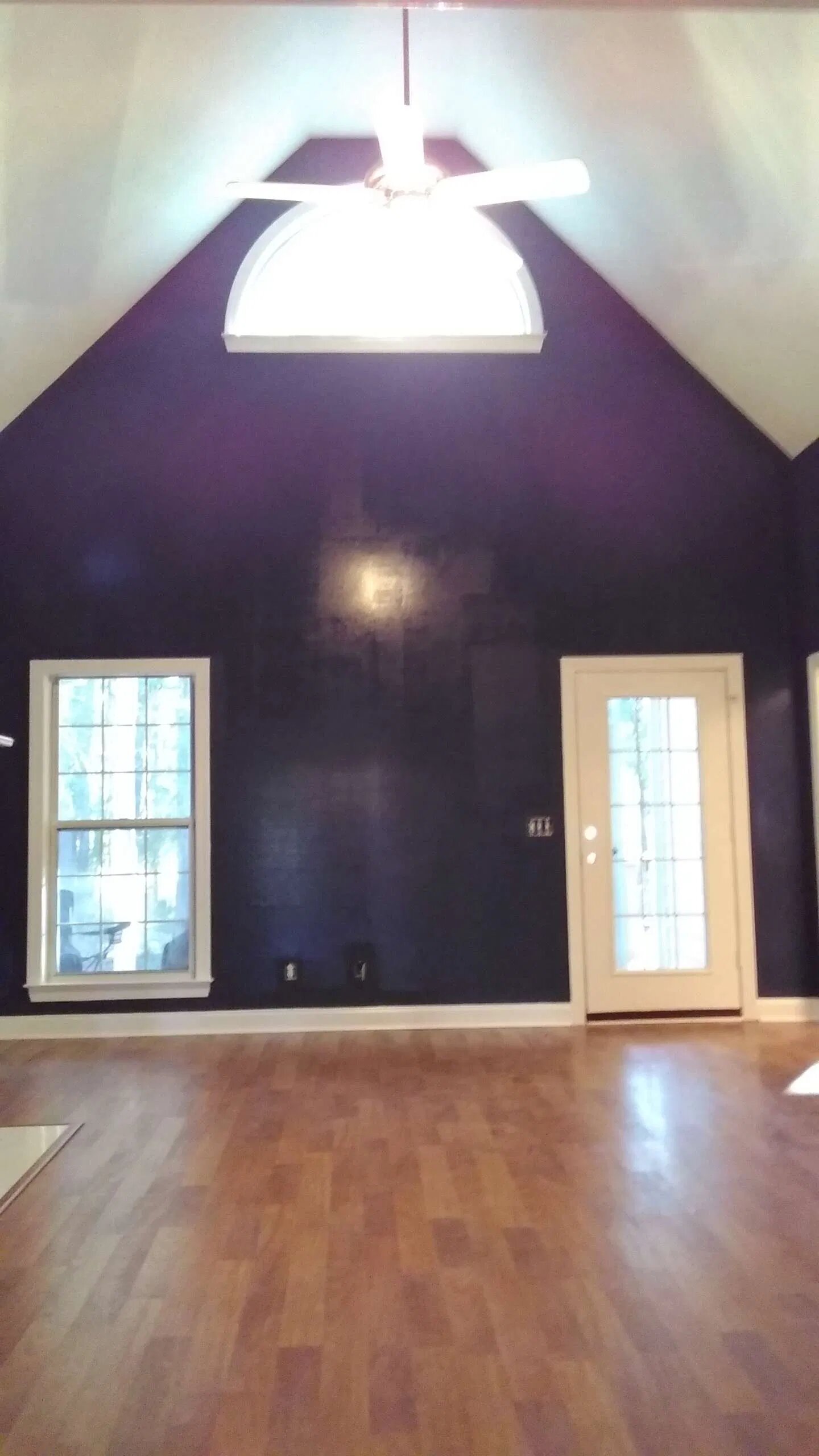
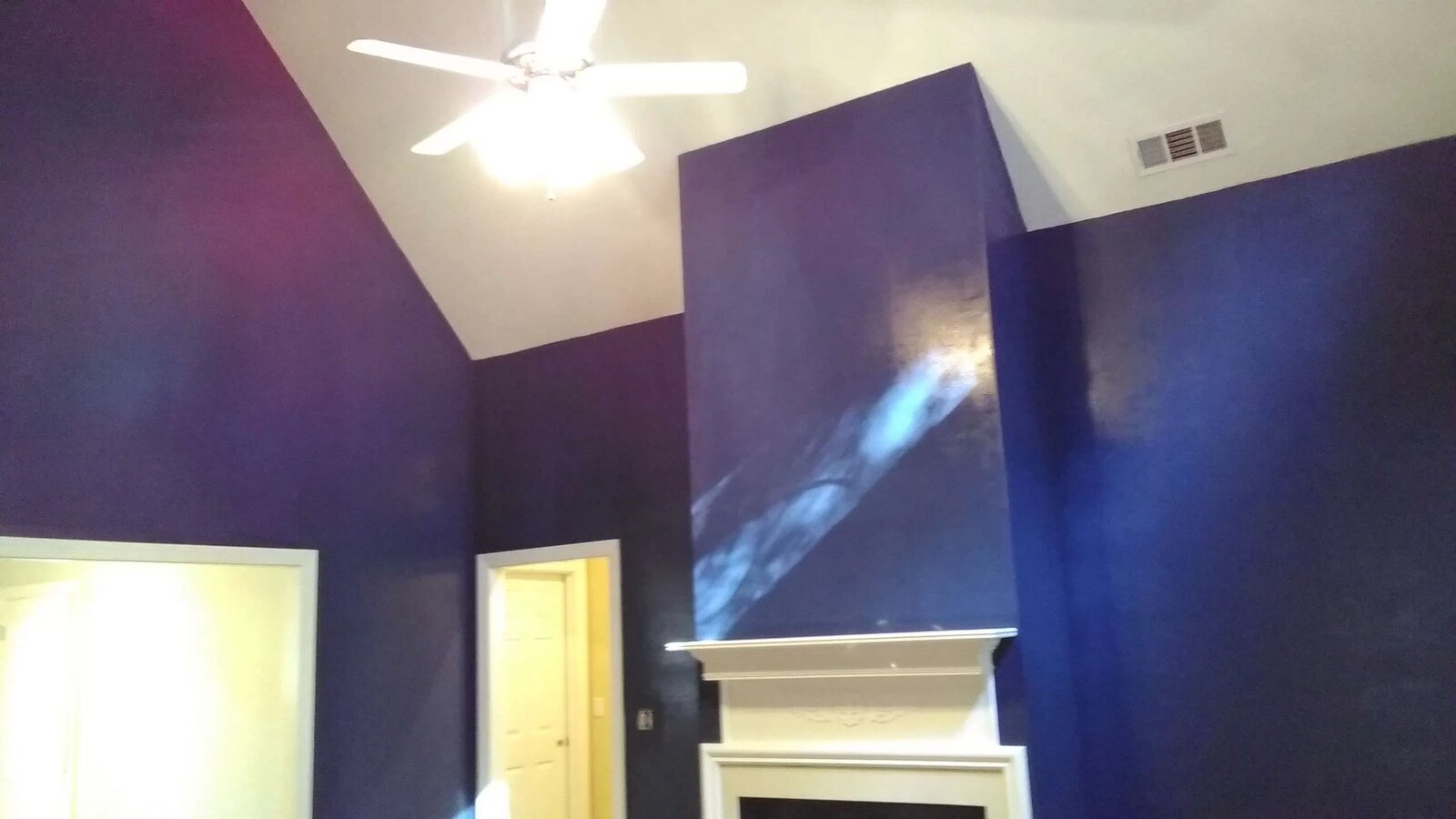
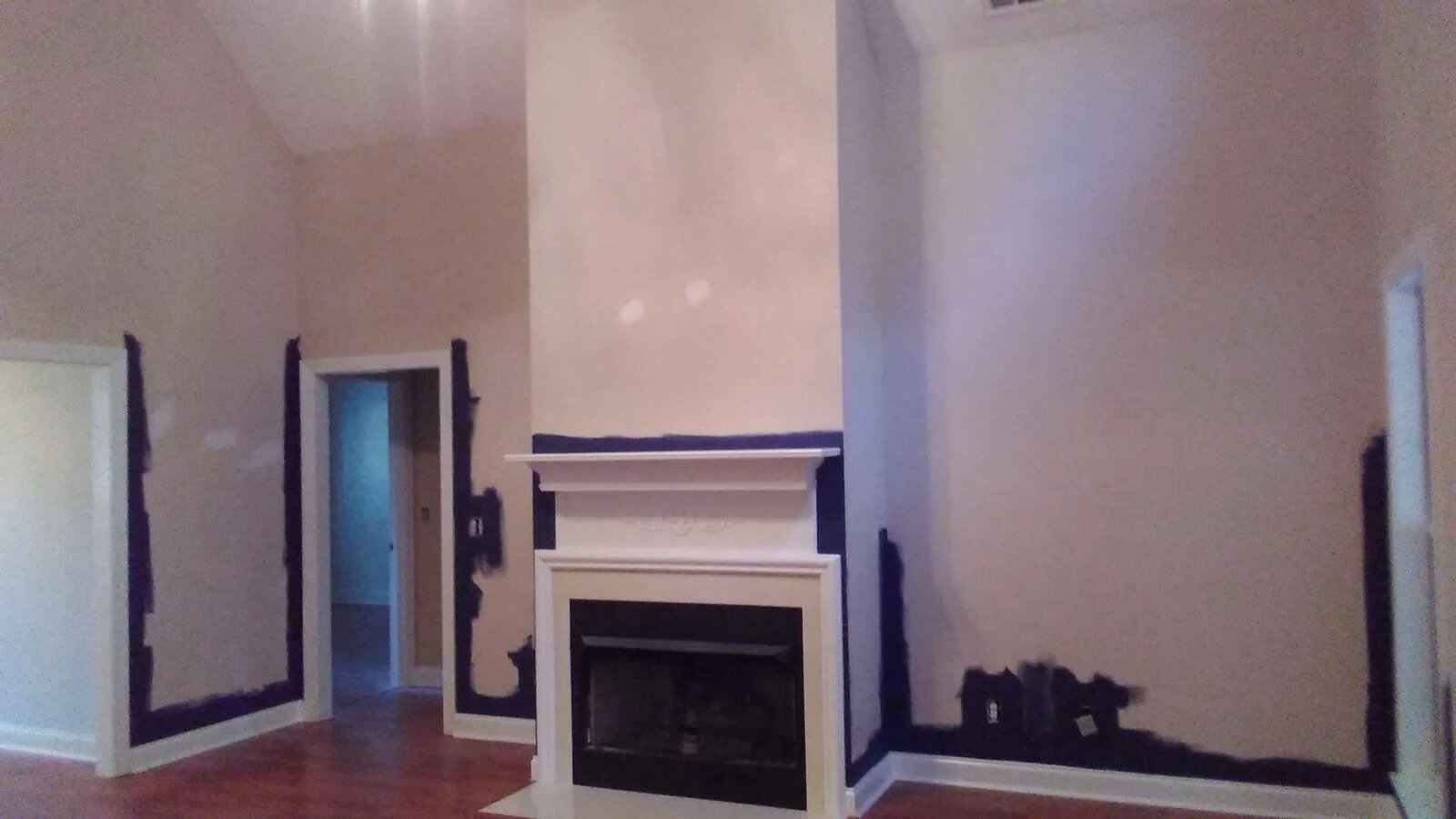
Open living room with full vaulted ceiling, large front windows, and a chimney chase running the full height of the room. Existing peach walls felt dated. Customer wanted a bold dark accent on the chimney chase that would give the tall space a focal point without darkening the rest of the room.
Solution
Re-painted walls and vaulted ceiling in a soft warm white to maximize light reflection across the vaulted volume. Painted the full-height chimney chase in a deep saturated purple-blue accent that draws the eye and grounds the room visually. Trim, windows, and the entry door kept crisp white for contrast against the accent.
Products used
Sherwin-Williams Cashmere Interior Latex (warm white walls and ceiling, matte). Sherwin-Williams Cashmere (chimney chase, deep purple-blue accent, eggshell). Sherwin-Williams ProClassic Interior Enamel (trim, doors).
Challenges
Tall vaulted ceiling reach required extension ladder + scaffold work; cut-in at the cathedral peak is unforgiving and has to land straight. Dark color on a 16-foot-plus tall wall requires aggressive product coverage and even film thickness — a single roller transition shows from across the room. Two coats with overnight dry between, batched from a single mix.
Result
Room reads as deliberate and architectural rather than just painted. The accent wall draws the eye up the vault and gives the open floor plan a center of gravity.
Interior
Problem
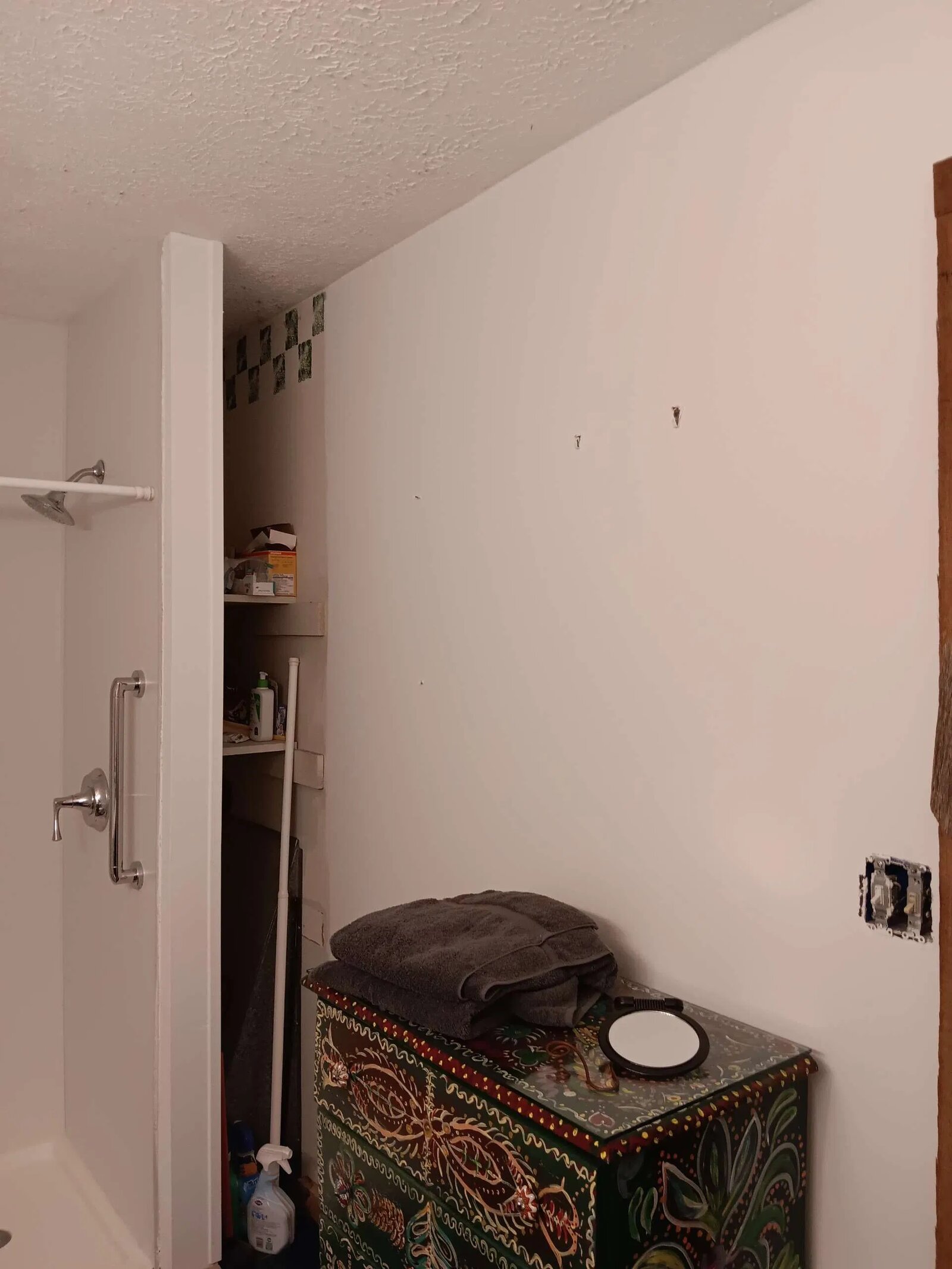
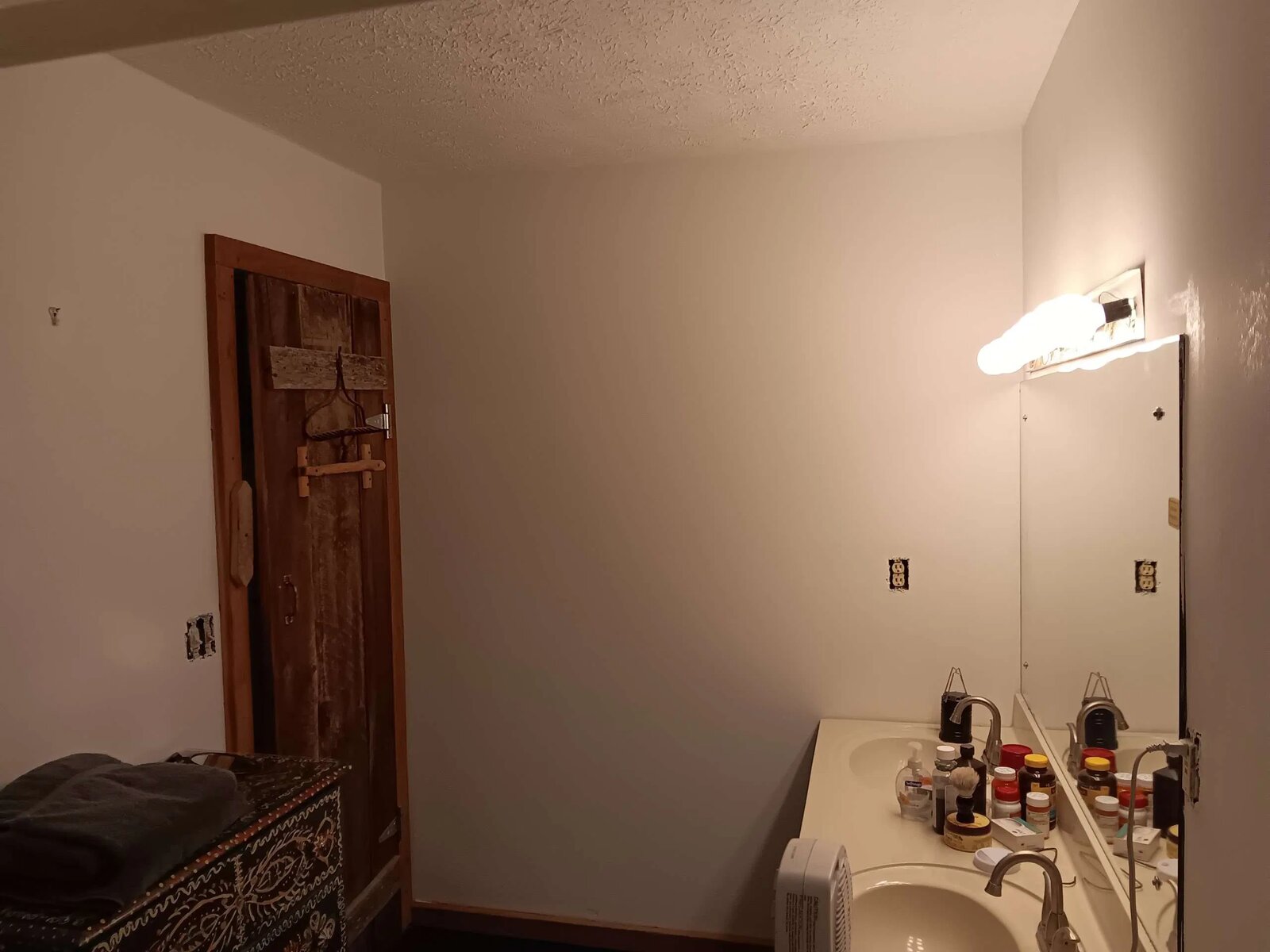
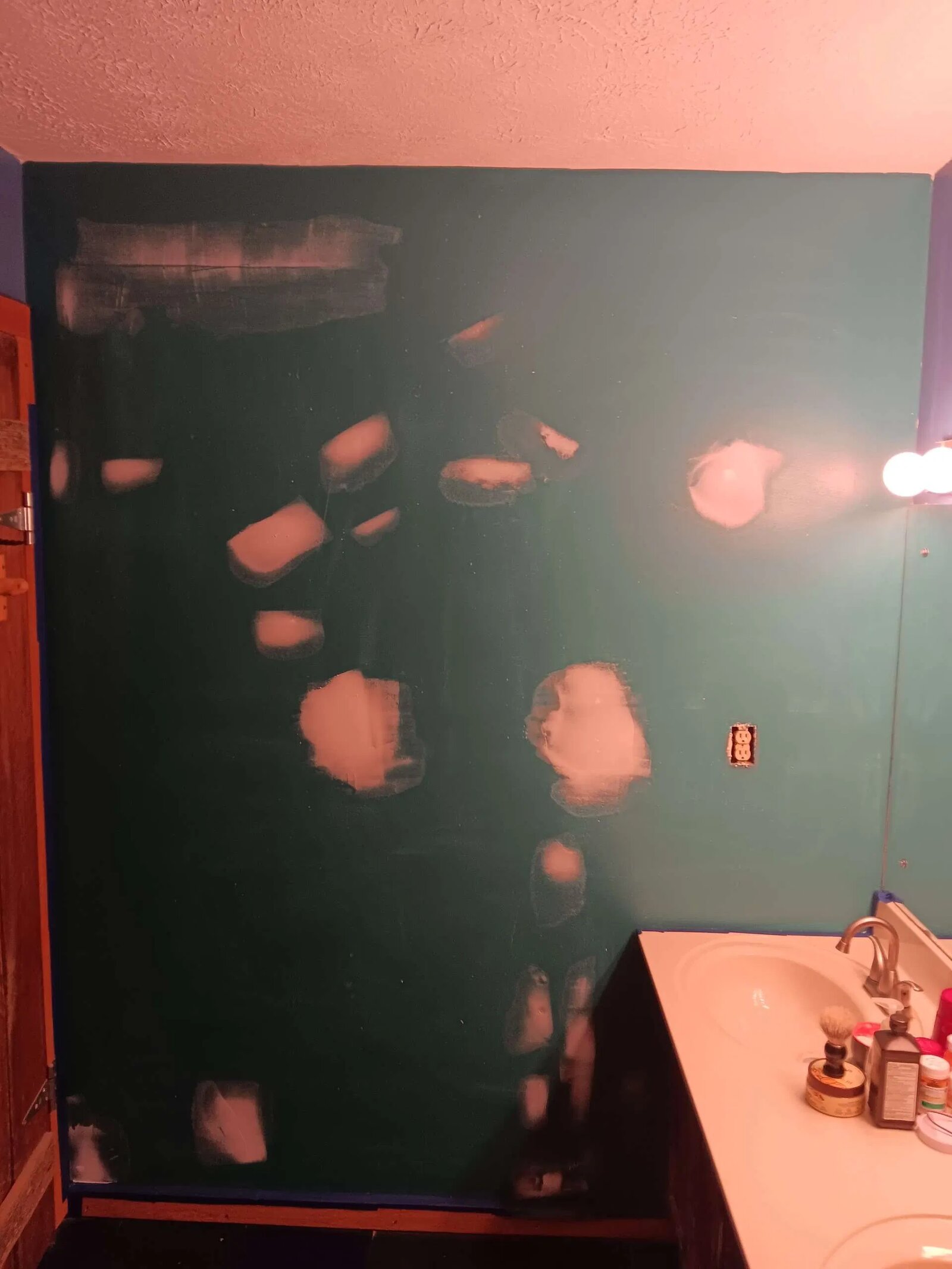
Bathroom with deep teal walls that had years of accumulated nail-hole, screw-hole, and surface damage from previous fixture installs and removals. Multiple small repairs all the way up the wall. Customer wanted to neutralize the color completely and start clean, while keeping the rustic wood door as a feature.
Solution
Skimmed every wall surface with lightweight spackle to fill, level, and feather every patch into the surrounding plane. Sanded smooth at multiple grits to remove every patch edge. Primed all repaired areas to seal the joint compound. Two coats of finish color — a clean warm white — over every surface including the ceiling. Rustic wood door left untouched as the warm feature anchor.
Products used
USG Sheetrock All-Purpose lightweight spackle. Zinsser Bulls Eye 1-2-3 Primer (over all patched areas). Sherwin-Williams ProClassic Interior Enamel (walls and ceiling, warm white).
Challenges
Heavily-patched walls only look smooth if every single repair is fully sanded, primed, and then re-painted at full film thickness — under-priming shows up as ghost patches under raking light. Bathroom vanity-strip lighting is particularly unforgiving of any surface variation; the finish has to be done to a higher standard than a typical bedroom wall.
Result
Bathroom reads as a clean, light, intentional space. No visible trace of the prior dozens of patches under any lighting condition. The rustic wood door becomes the deliberate warm feature.
Restoration
Problem
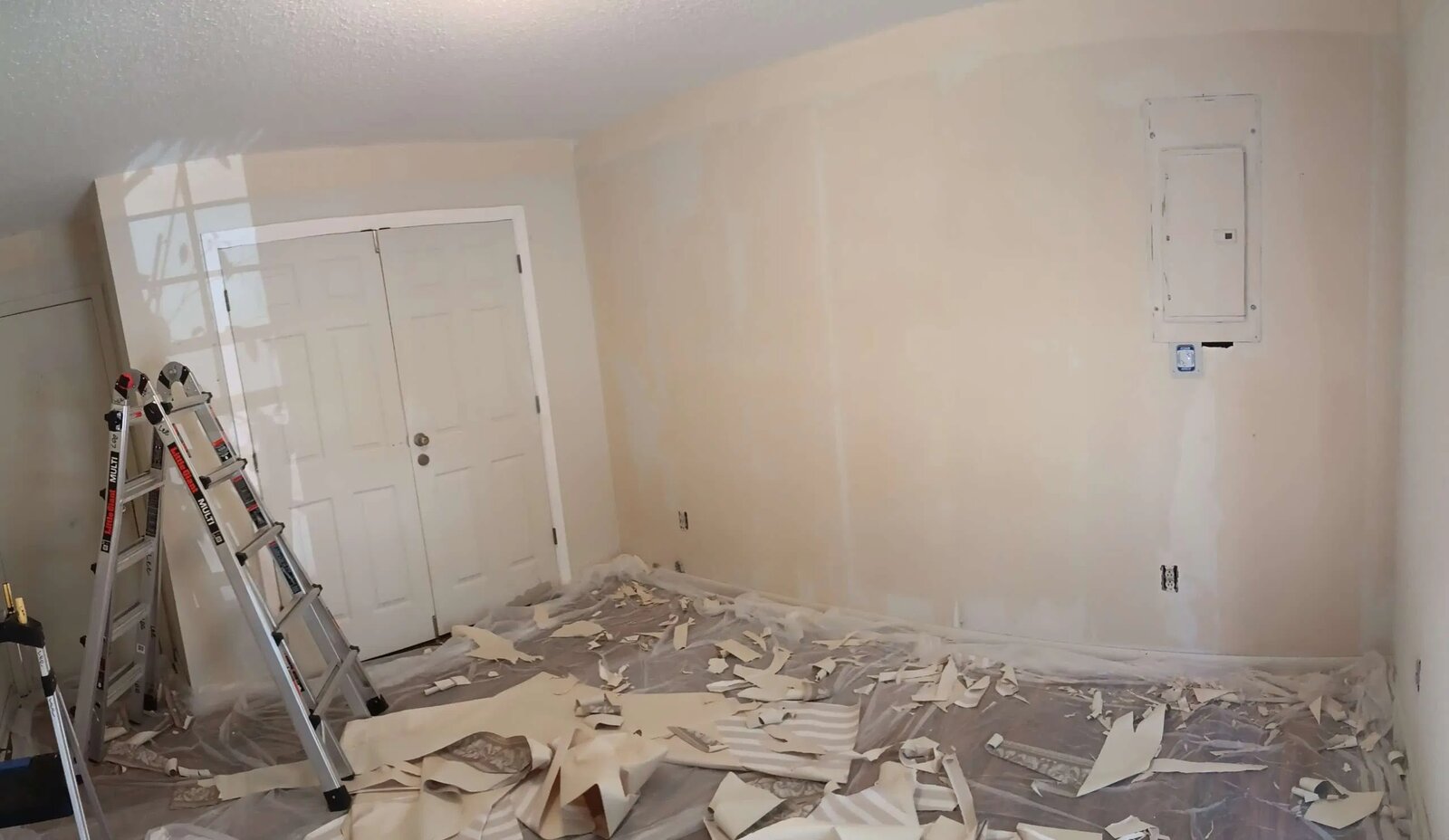
Customer was preparing a small home for sale and needed a thorough interior refresh to show well. Outdated wallpaper across multiple rooms had to come down. Walls needed to be re-primed and painted in clean neutrals. Pre-sale timeline meant the work had to be done before the listing went live.
Solution
Removed all wallpaper room by room using a steam-and-scrape method to preserve the underlying drywall. Washed walls thoroughly to remove adhesive residue — adhesive left behind will bleed through any paint film. Primed all newly-exposed surfaces. Painted walls and ceilings in clean warm neutrals; trim and doors refreshed to bright white.
Products used
DIF Wallpaper Removal Solution. Zinsser Bulls Eye 1-2-3 Primer over all stripped areas. Sherwin-Williams interior latex (walls and ceilings). Sherwin-Williams interior enamel (trim and doors).
Challenges
Wallpaper removal is unpredictable — every room has its own adhesive history. Decades-old paste bonded to drywall facing paper requires multiple passes with progressively stronger solutions. Hardwood floors had to be protected absolutely through every phase since steaming and scraping produce water and adhesive drips. The pre-sale timeline left no room for re-work.
Result
The home sold. Customer left a five-star review for the work. That's the outcome we run pre-sale refreshes for — a finished home that shows clean, lists confidently, and closes.
Exterior
Problem
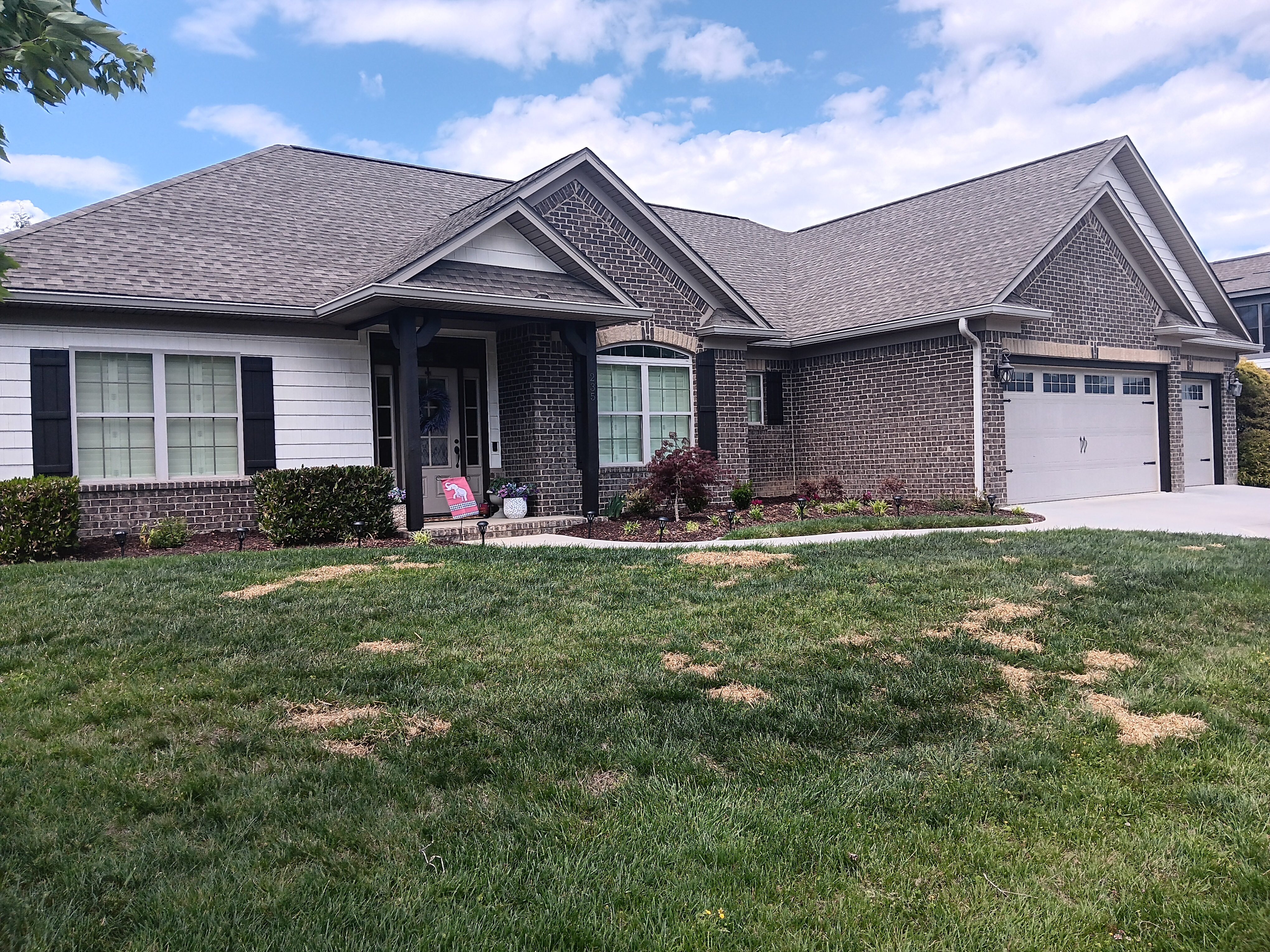
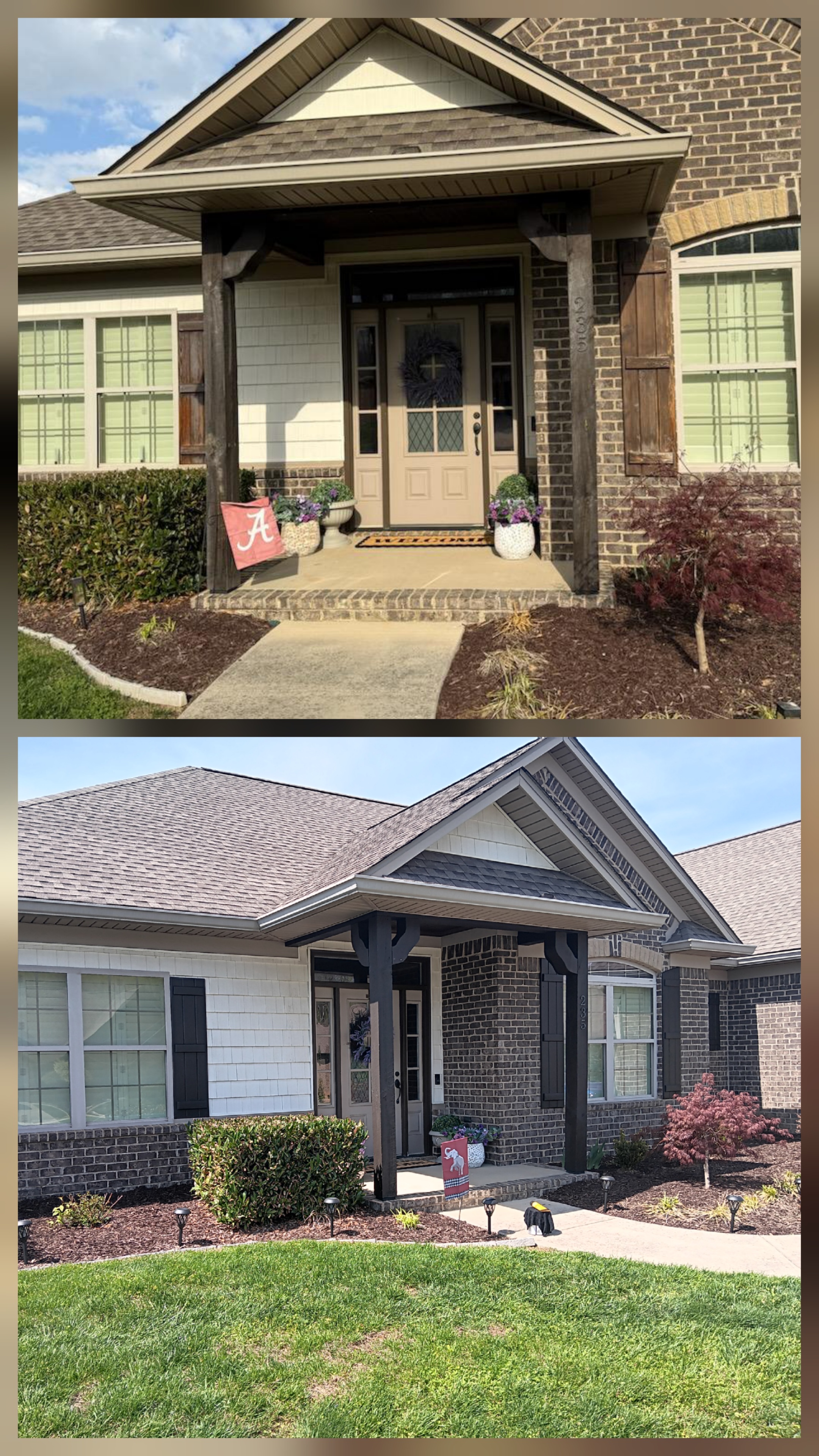
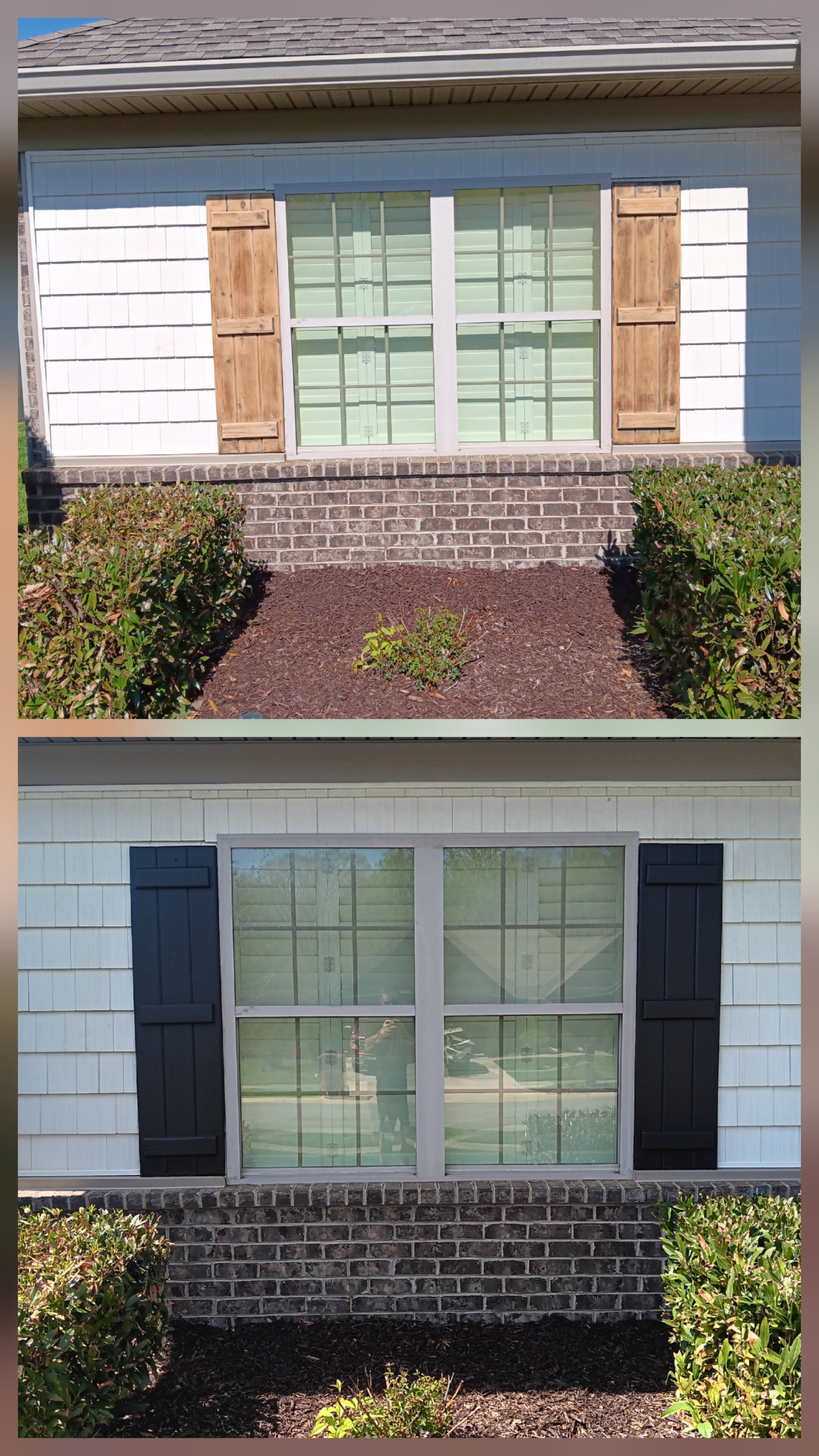
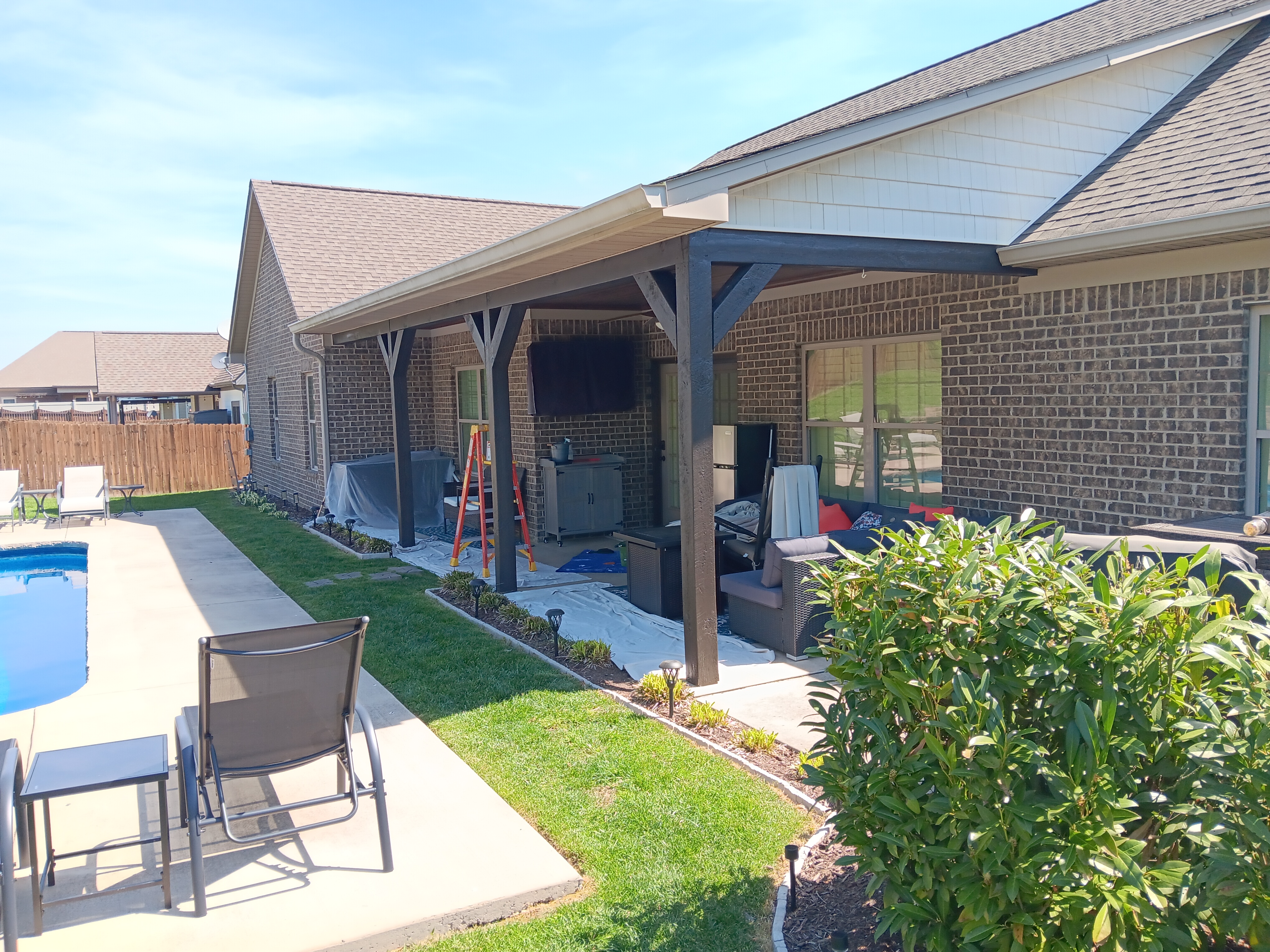
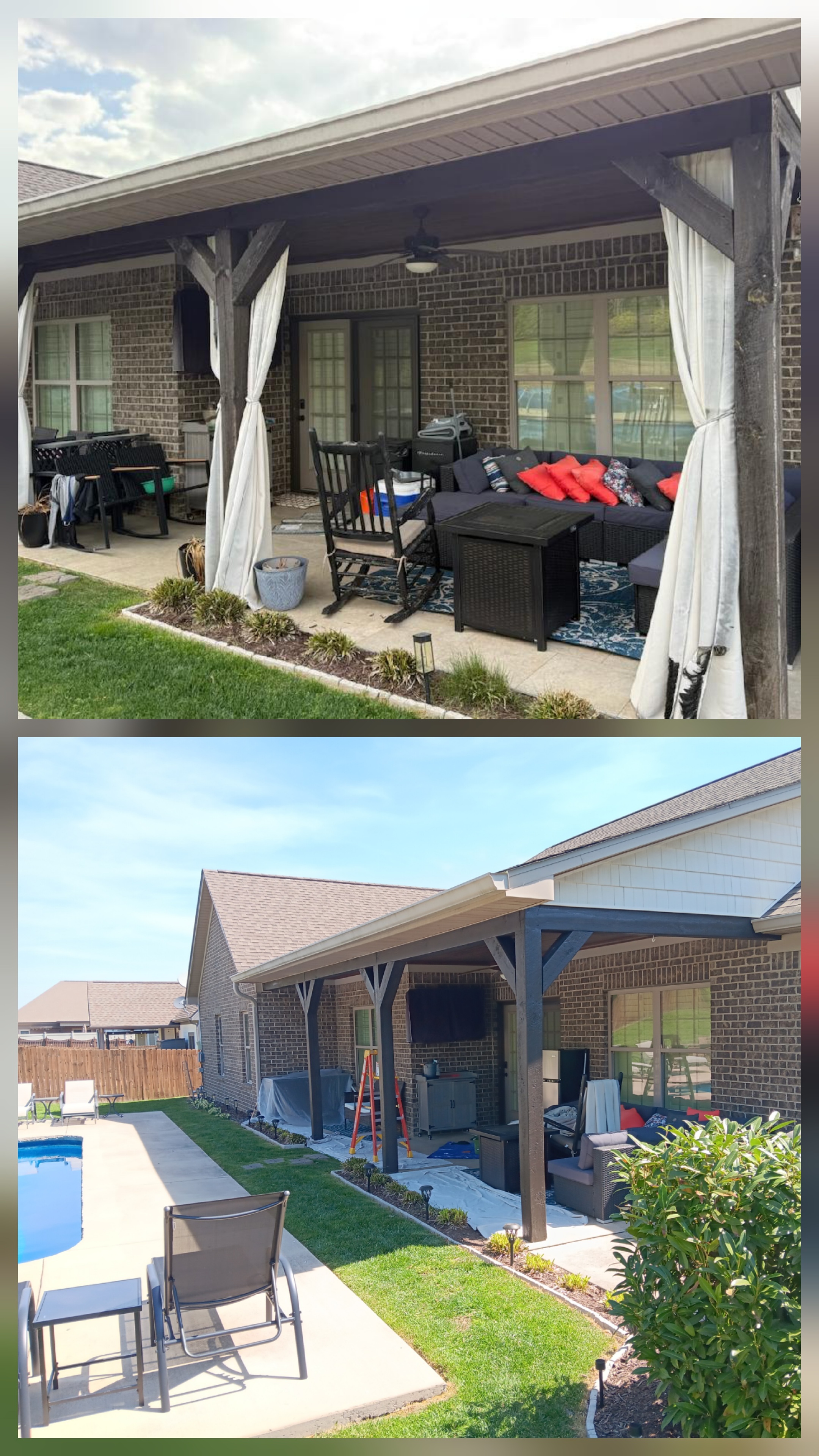
Newer brick home where the original wood elements — front porch pillars, window shutters, garage trim surrounds, and the backyard pavilion timber — had been installed in light natural wood. Owner wanted the entire exterior brought to a single deeper tone that would tie the front and back of the property together, hold up to Tennessee weather, and read as deliberately finished rather than builder-grade.
Solution
Hand-applied two coats of Sherwin-Williams Woodscapes Dark Walnut across every wood element on the property — front porch pillars and beams, window shutters on the entire front elevation, dark trim surround framing both garage doors, and the full timber framework of the backyard pavilion over the pool deck. Drop cloths and plastic protected the brick, the pool, the pool deck, and the landscaping at every phase. Coats timed against humidity and direct-sun exposure to land an even cure.
Products used
Sherwin-Williams Woodscapes Dark Walnut exterior wood stain (two coats on all wood elements). Drop-cloth and plastic protection across brick, pool, pool deck, and adjacent landscaping.
Challenges
Woodscapes lays down beautifully on raw cedar but requires careful prep and even pressure to lift to its full depth on weathered wood — the front porch pillars were already gray with UV exposure and needed thorough surface prep before the stain would penetrate evenly. Pool-deck pavilion work meant total overspray containment over open water through both coats. Shutters and garage trim required tight cut-lines against white siding and cream brick where any drift would show.
Result
The exterior reads as one coordinated design instead of a collection of light wood pieces against brick. Dark Walnut deepens the contrast against the cream brick and white trim, makes the pillars and shutters into intentional design features, and gives the backyard pavilion a finished-room feel over the pool. The whole property pulled together visually.

The work between the photos.
Not every project ends in a glossy hero shot. Some of the work that matters most happens during prep, in materials choice, and on jobs that built the skill but never made it into a marketing portfolio. These are some of those.
New-construction support
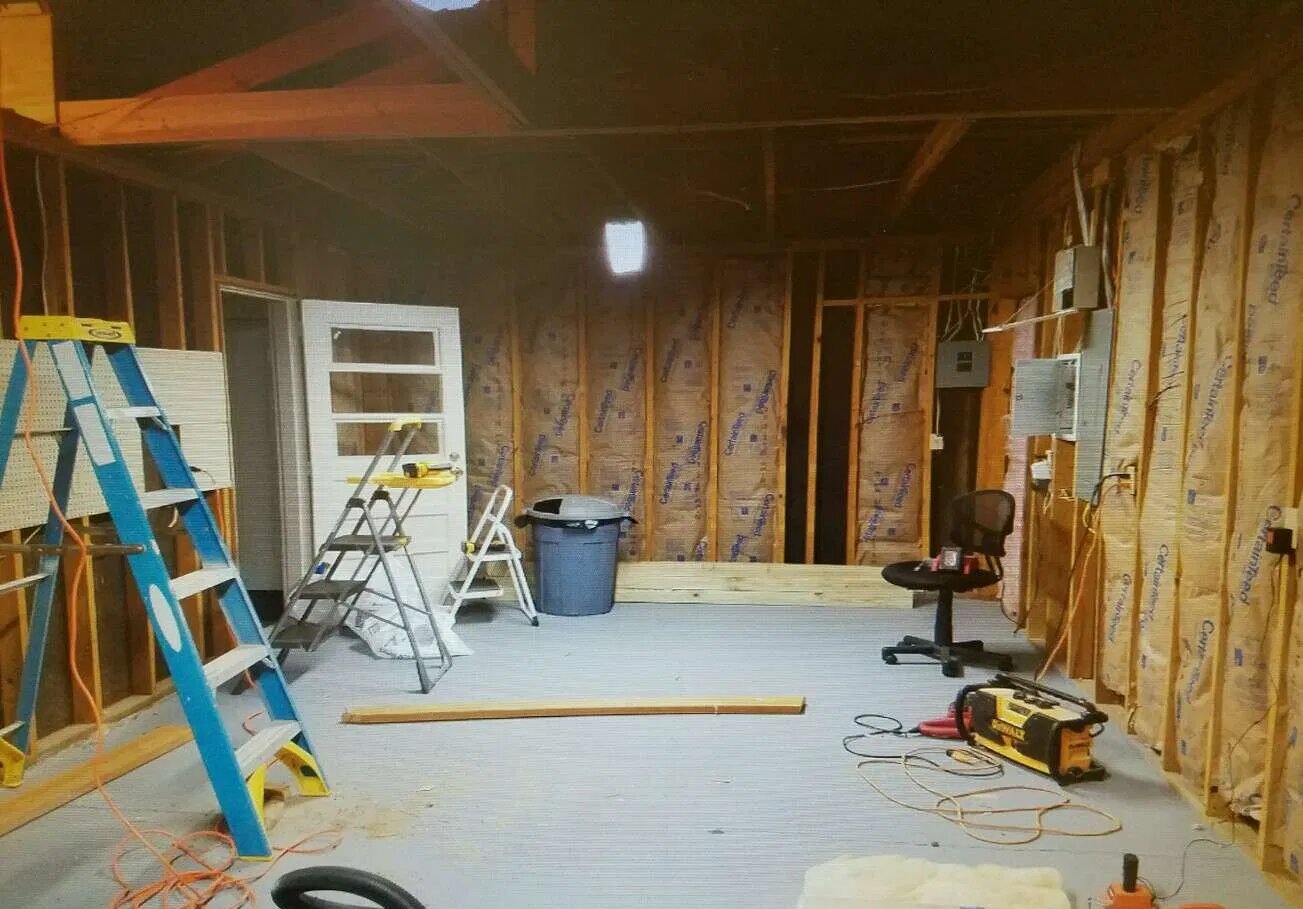
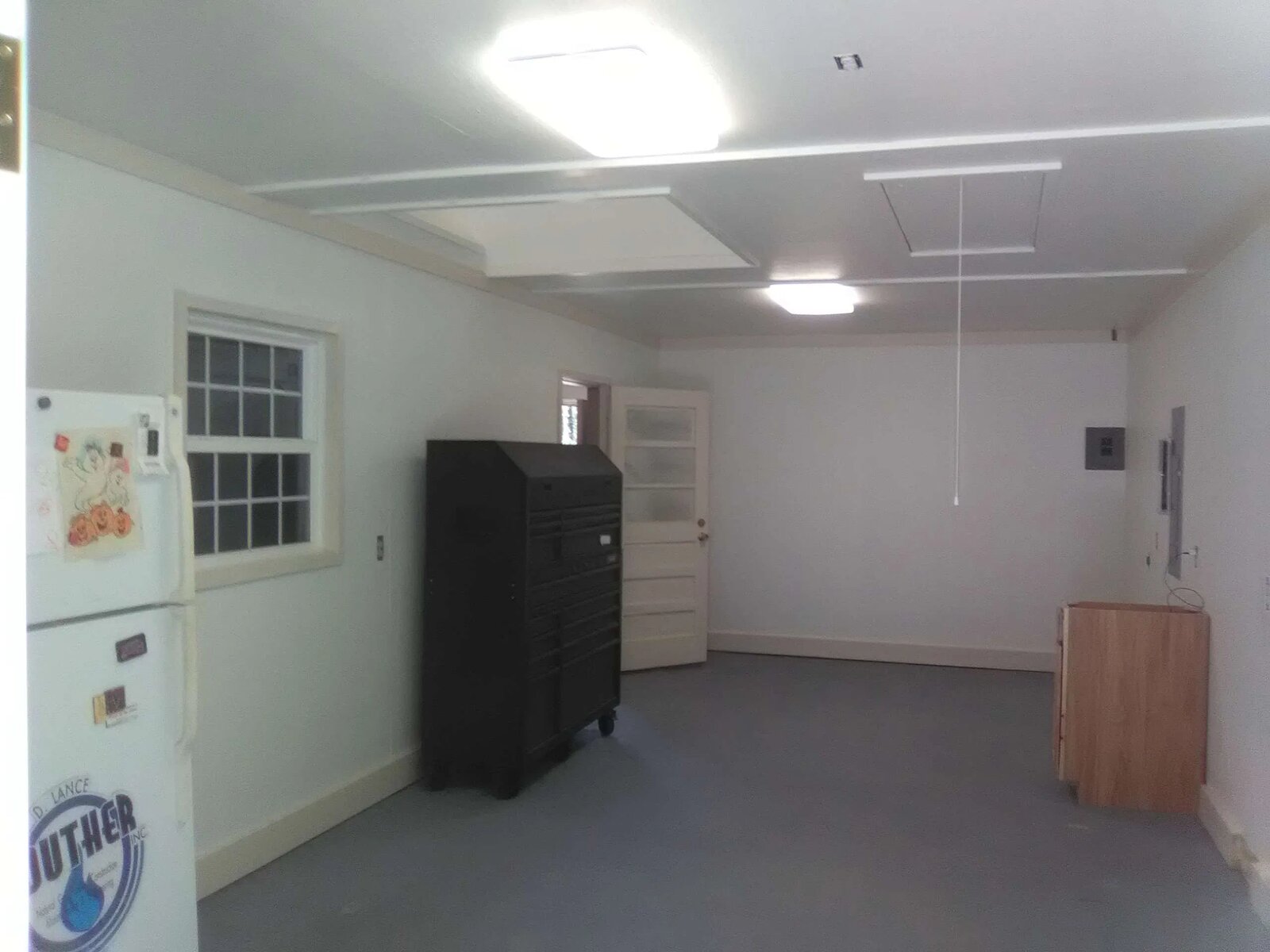
Working alongside the builder on a new-construction garage. Painting at this stage means coordinating around insulation, electrical, and other trades, and getting primer and base coats on before drywall closes everything in. Most customers never see this phase.
Materials we trust
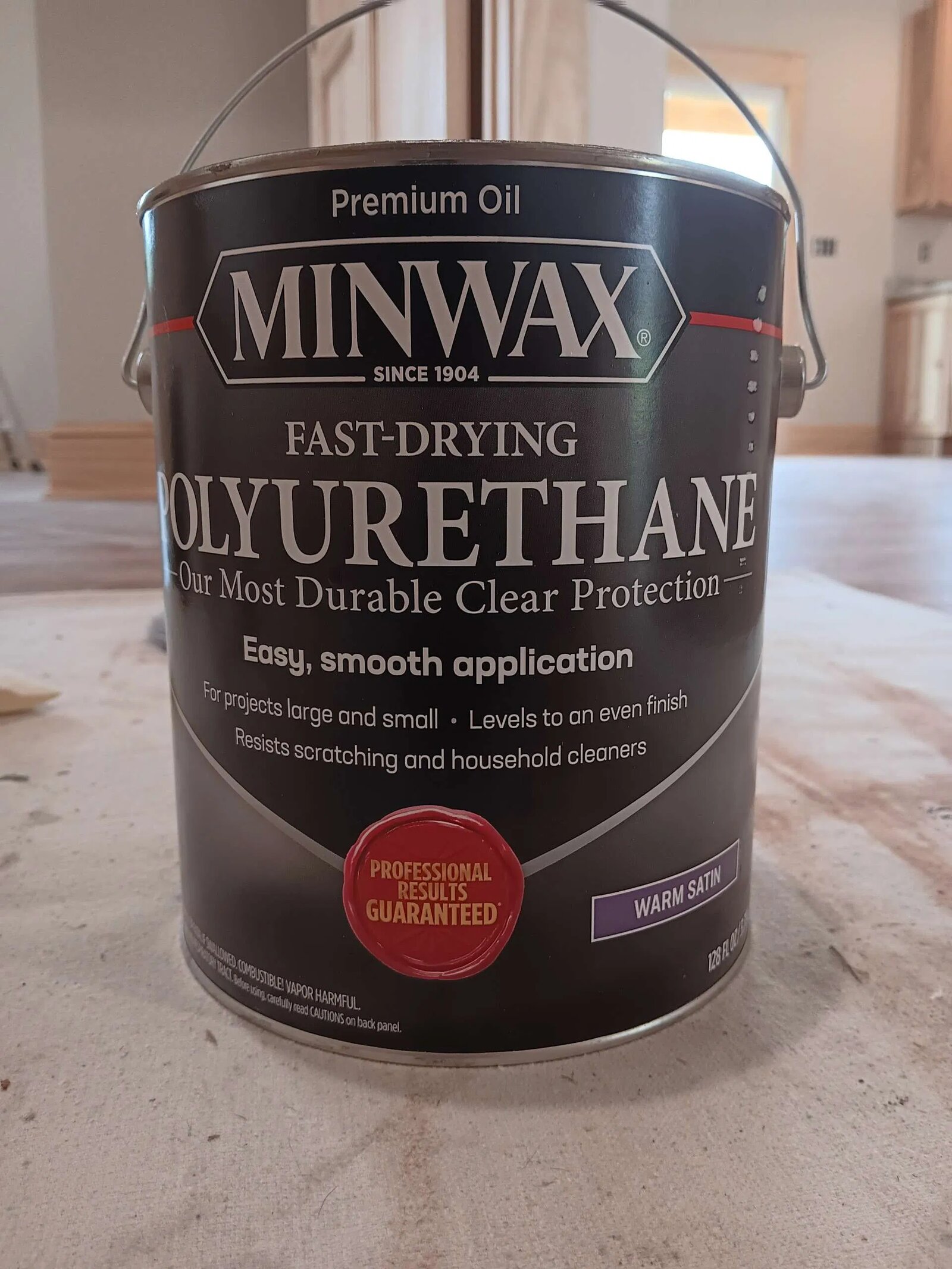
Minwax Fast-Drying Polyurethane in warm satin — our standard top coat for stained interior wood (ceilings, doors, railings, custom trim) where the customer wants depth and durability without changing the wood tone. We pick products by what holds up, not by what is on sale.
Small space, clean refresh
Compact interior — kitchenette and utility area. White walls, fresh trim, painted ceilings. Not every project needs five photos and a hero shot. Some are quick clean refreshes that get a room from dated to current in a single day.
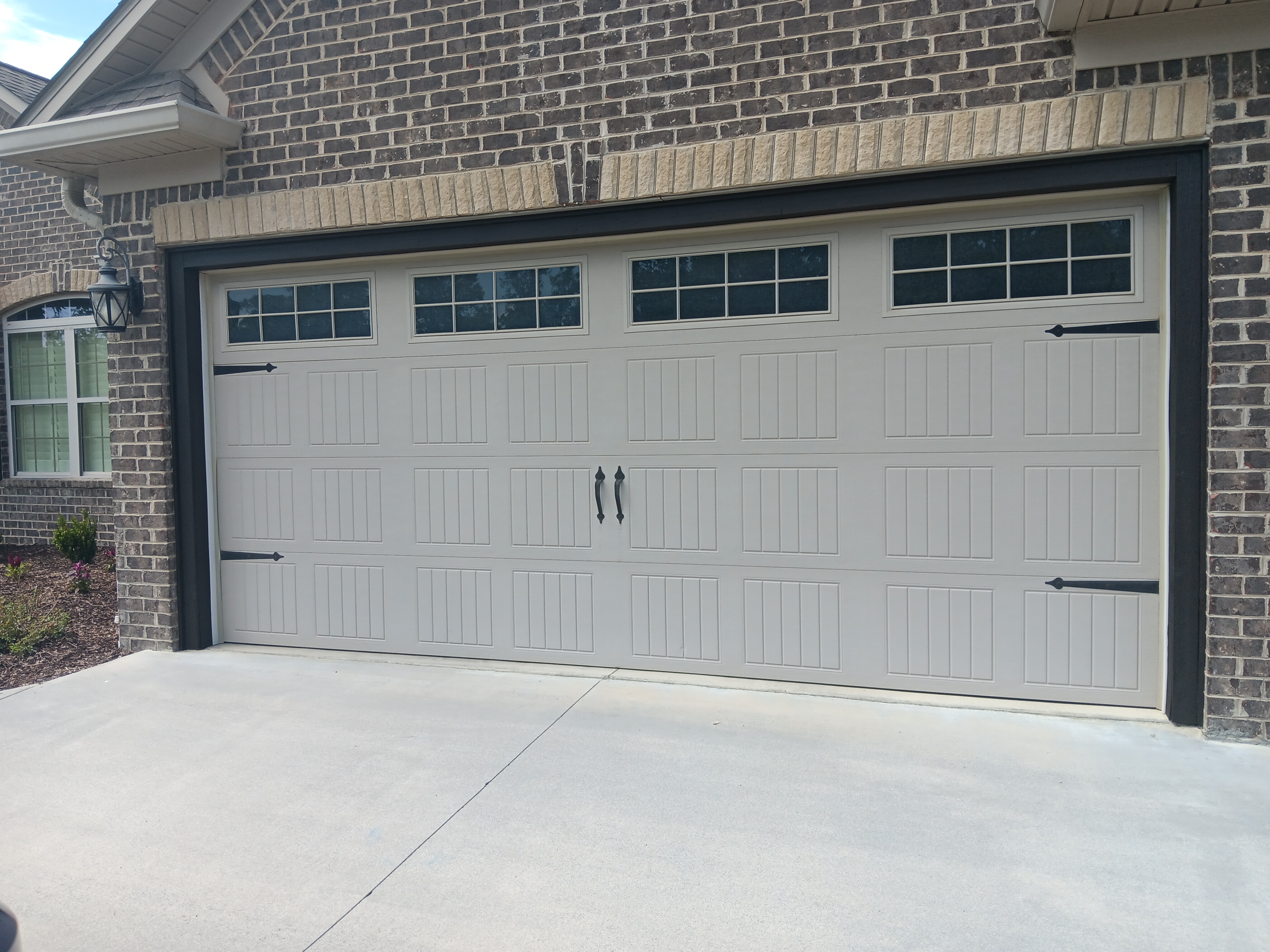
Real Painting By Lee work, across the Tri-Cities region.
Every project above is a real Painting By Lee job, with hero photos captured at the site. We’re continuing to document recent projects with full case studies as customers grant photo permission.
We don’t use stock photography. We don’t publish photos of customer homes without explicit consent. If you don’t see a category that matches your project, ask — we’ve likely done it; it just hasn’t been documented yet.
Two ways to start.
If you’d rather have a conversation, talk to Ask Lee™. If you have a real project ready to submit, use Project Assessment™.